
Timor-Leste Advances Plans for Two New Marine Protected Areas
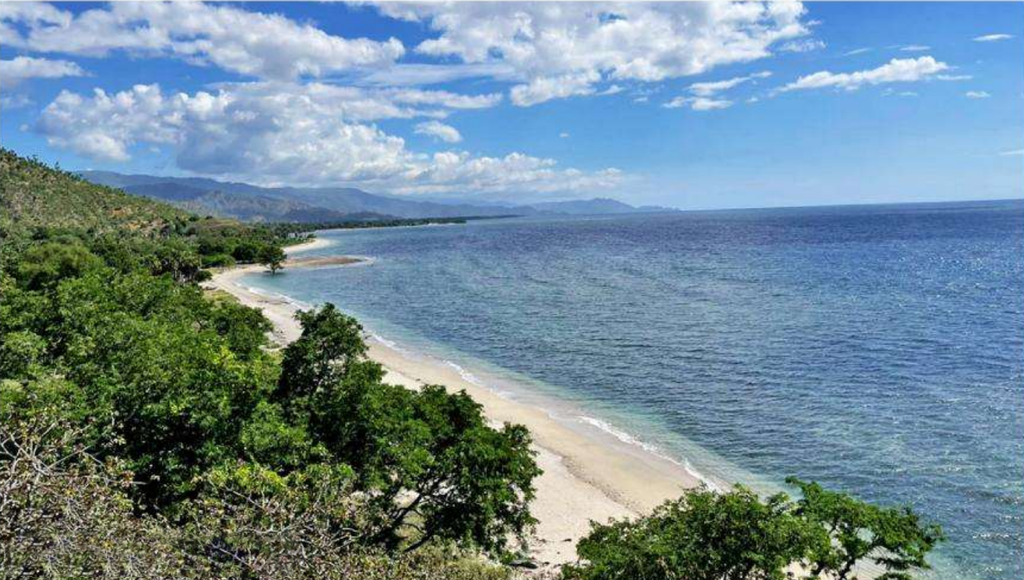
Two marine areas in Timor-Leste are being proposed for Marine Protected Area (MPA) development following field assessments that identified important marine habitats, fishing grounds, and biodiversity. The proposed MPAs, Metinaro–Ilimano on the northern coast and Manufahi–Natarbora on the southern coast, are expected to contribute more than 60,000 hectares to the country’s marine conservation efforts.
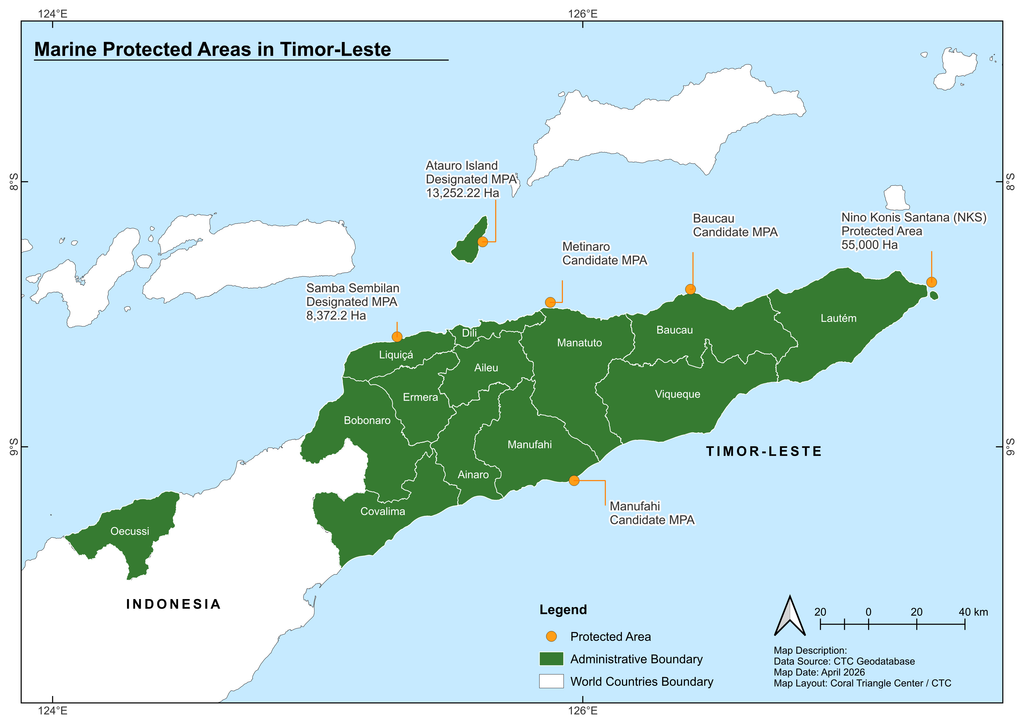
The Coral Triangle Center (CTC), in collaboration with the Ministry of Agriculture, Livestock, Fisheries, and Forestry (MALFF), is gathering ecological and socio-economic information to help determine the boundaries, zoning, and management plans for both areas. So far, 162 people, including fishers, local authorities, women, youth, and other community members, have participated in the process. Local fishers have also supported marine surveys by providing boats and sharing their knowledge of fishing grounds and coastal areas.
The proposed MPAs would support Timor-Leste’s commitment to conserve 30% of its marine waters by 2030 under the Kunming-Montreal Global Biodiversity Framework and the country’s updated National Biodiversity Strategy and Action Plan.
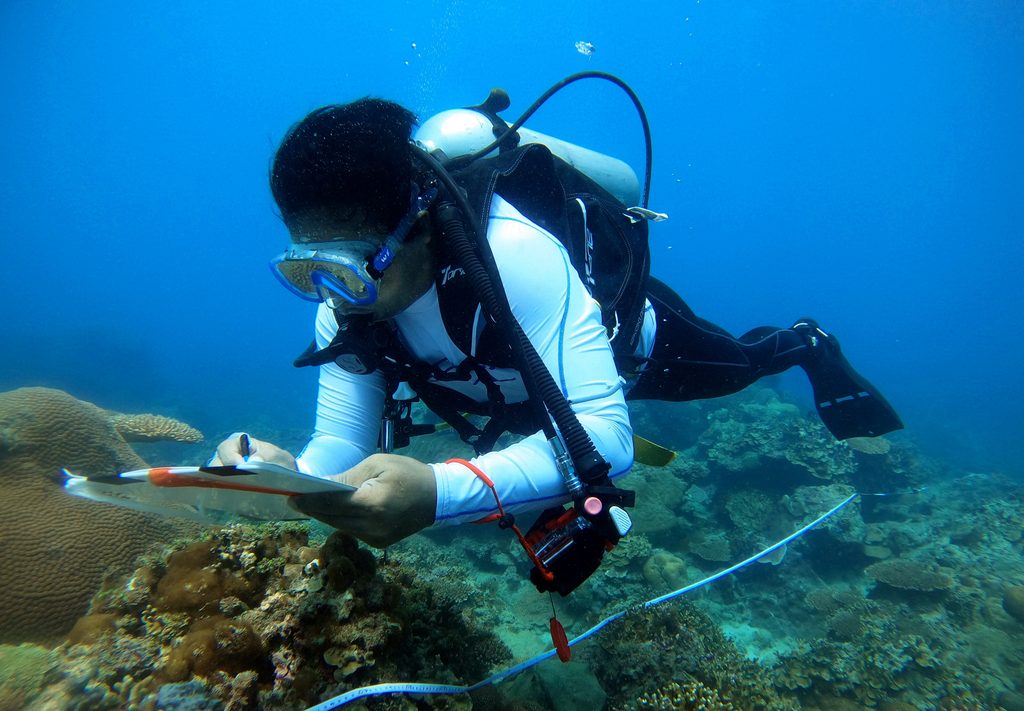
In Metinaro–Ilimano, the proposed MPA spans three villages—Wenunuc, Sabuli, and Ilimano—across Dili and Manatuto municipalities. While its boundaries are still being assessed, the area is expected to exceed 8,000 hectares. CTC’s field assessment in June 2026 documented coral reefs, mangroves, and fishing grounds supporting species such as flying fish, mackerel, and mackerel tuna. The area also lies along marine wildlife and migratory routes, including those used by pygmy blue whales. Several sites, including the K41 shipwreck, Behau, One Dollar Beach/Black Rock, and Secret Garden, were identified for their marine tourism potential.
Along the southern coast, the proposed Manufahi–Natarbora MPA encompasses eight villages in Manufahi and four in Manatuto. Earlier zoning work estimated its area at approximately 50,296 hectares, although its boundaries remain subject to refinement.
The area includes fishing grounds and coastal habitats used by communities in Betano, Alas, Fatuberliu, and Natarbora. It supports fisheries resources such as snapper, mackerel, and tuna, and could help connect marine conservation areas along Timor-Leste’s southern coast. At Naan Kurun Lagoon, surface observations also recorded turtles, birds, bats, fish, and prawns.
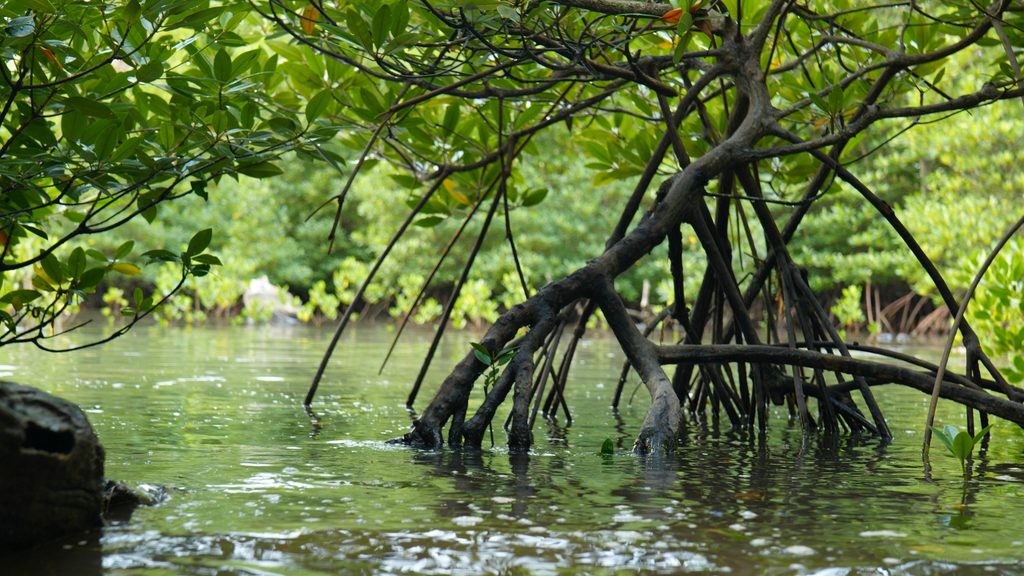
The assessments also documented pressures on these ecosystems, including unsustainable or illegal fishing practices, overfishing and habitat degradation, marine debris, and degradation of coastal reef ecosystems. In Metinaro–Ilimano, the survey team found a dead green turtle (Chelonia mydas) entangled in a ghost fishing net, illustrating the threats posed by abandoned fishing gear to marine wildlife.
“An MPA can provide a framework to protect important habitats and species while maintaining sustainable use of marine resources. In the longer term, effective management could help maintain fish habitats and fisheries productivity, protect coastal ecosystems and create opportunities for sustainable tourism. The value of these MPAs will depend on good zoning, community participation, monitoring, and effective management,” said CTC Senior Marine Conservation Advisor, Marthen Welly.
The assessment findings will help inform the proposed MPA boundaries, zoning and management plans. These will identify areas requiring stronger conservation, areas for sustainable fishing and areas suitable for activities such as tourism. The plans will also consider management measures, monitoring and enforcement to balance conservation with the needs of communities that depend on marine resources for food and livelihoods.

For Manufahi–Natarbora, the current work builds on an earlier marine zoning proposal developed by MALFF under the Arafura and Timor Seas Ecosystem Action Phase II (ATSEA-2) project, which concluded in 2023. CTC’s current assessment is updating the information needed to inform a new zoning and management plan.
Both proposed MPAs align with Timor-Leste’s Blue Economy Policy and Action Plan 2025–2035, which prioritizes marine biodiversity protection, sustainable resource use, climate resilience, and marine spatial planning. The policy links marine conservation with economic and social development for coastal communities, while the country’s maritime spatial planning framework supports the management of different activities within its waters.
Although the boundaries have yet to be finalized, Metinaro–Ilimano and Manufahi–Natarbora are expected to contribute more than 60,000 hectares to Timor-Leste’s marine conservation efforts, supporting the country’s goal of conserving 30% of its marine waters by 2030.
Writers: Asia Salsabilla, Marthen Welly, Fidel Guterres,
Photos: Marthen Welly/CTC, Andreas Muljadi