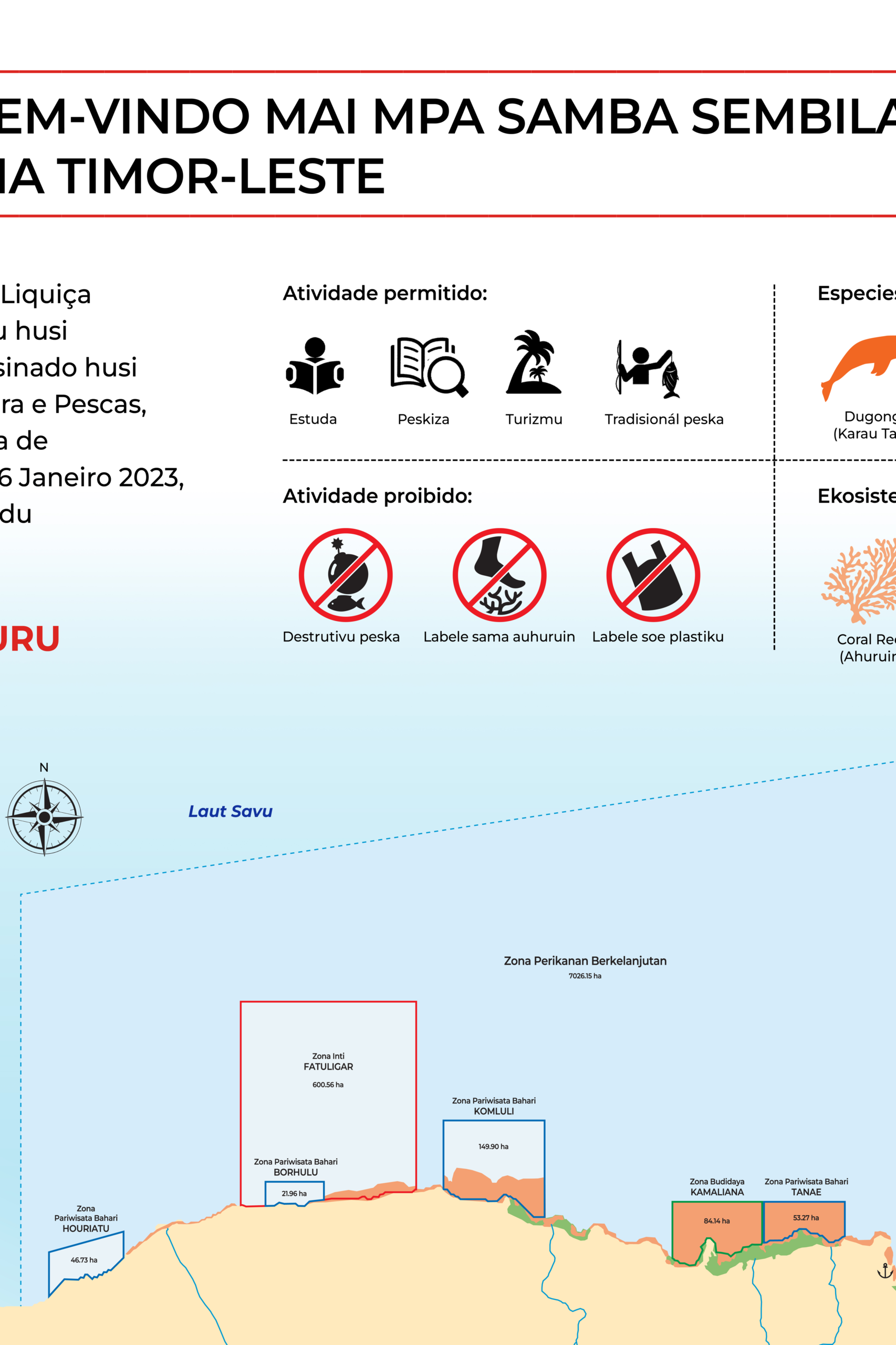
Samba Sembilan Liquica MPA
Marine Life & Environmental Threats
The Liquiçá MPA protects diverse ecosystems including coral reefs, seagrass beds, and mangroves. These habitats support emblematic species such as dugongs, sea turtles, and blue whales. Surveys conducted by CTC in 2017 recorded a medium level of live coral cover (around 50%) across three observation points, though they also revealed areas where corals had been damaged by destructive fishing practices.
Beyond local issues, Timor-Leste’s marine ecosystems face broader threats. Illegal and destructive fishing, overexploitation of fish stocks, and pollution from waste—especially plastics—undermine marine biodiversity and ecosystem health. Such pressures reduce species abundance, compromise habitat quality, and threaten the long-term sustainability of fisheries and coastal livelihoods.

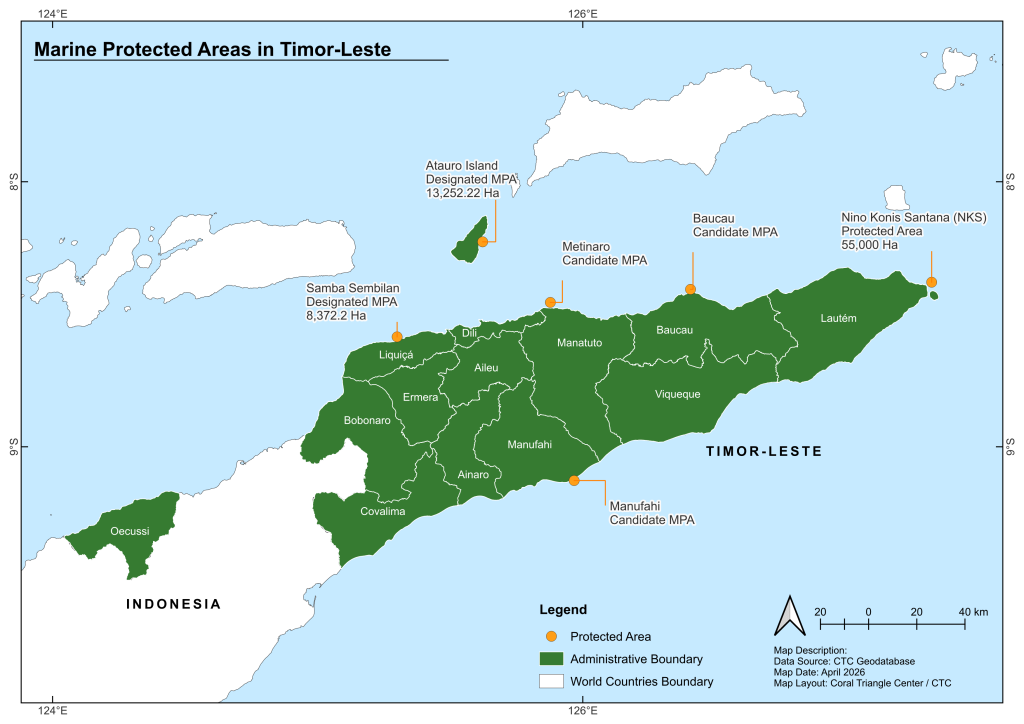
Location Map
Management & Conservation through Collaborations & Partnerships
The Liquiçá MPA integrates customary law with modern conservation planning. Tara Bandu, Timor-Leste’s traditional system of ecological rules, is formally embedded into the zoning structure, empowering communities to regulate resource use and enforce sustainable practices. The zoning plan includes a Central Zone, Marine Tourism Zone, Aquaculture Zone, and Sustainable Fishing Zone. Within these zones, permitted activities include study, research, tourism, and traditional fishing, while destructive fishing, stepping on corals, and plastic littering are prohibited.
CTC supports local communities and government partners in co-management through monitoring, enforcement, and awareness campaigns. Training is provided in MPA management, including monitoring of special marine species such as sea turtles for educational tourism. Inclusive governance and women’s empowerment initiatives are also being extended to strengthen long-term conservation and community resilience.

Learning & Impact
MPAs in Timor-Leste, including Liquiçá, demonstrate how conservation can be more effective and enduring when rooted in science, local culture, and collaborative partnerships. By combining Tara Bandu with formal marine management, they provide a practical model for bridging traditional knowledge and institutional frameworks in other coastal areas.

Learn More
Resources