
Introducing OECMs: Strengthening Local Capacity for Community-Based Marine Conservation in Maluku
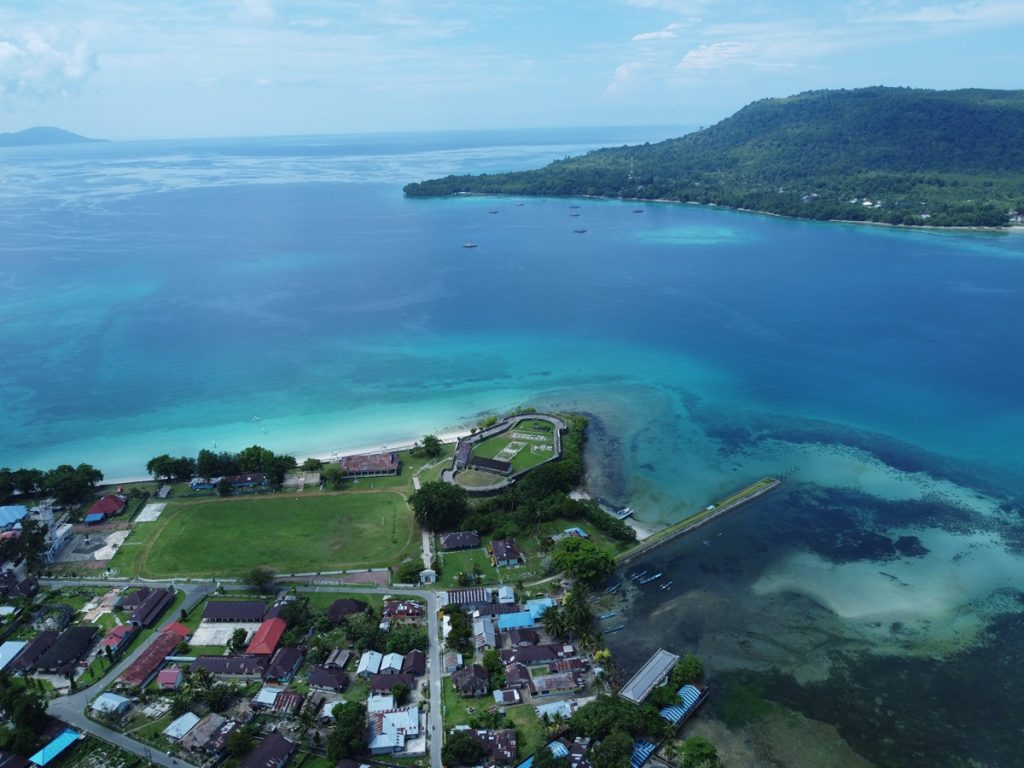
Technical discussions alone are not always enough to build public understanding and trust in conservation concepts. The Coral Triangle Center (CTC) took a different approach in its Introduction Training on Other Effective Area-based Conservation Measures (OECM), known locally as Kawasan Berdampak Konservasi (KBK), held in Ambon from May 18 to 20, 2026.
The three-day session created a space where participants could openly question, discuss, and test the concepts against their own experiences. The training brought together 43 participants, 15 women and 28 men, representing the Maluku Provincial Marine and Fisheries Agency (DKP), five villages and negeri—Hatta, Haruku, Pelauw, Kaibobu, and Soleh—alongside academics from Pattimura University and Darussalam University, and local civil society organizations.
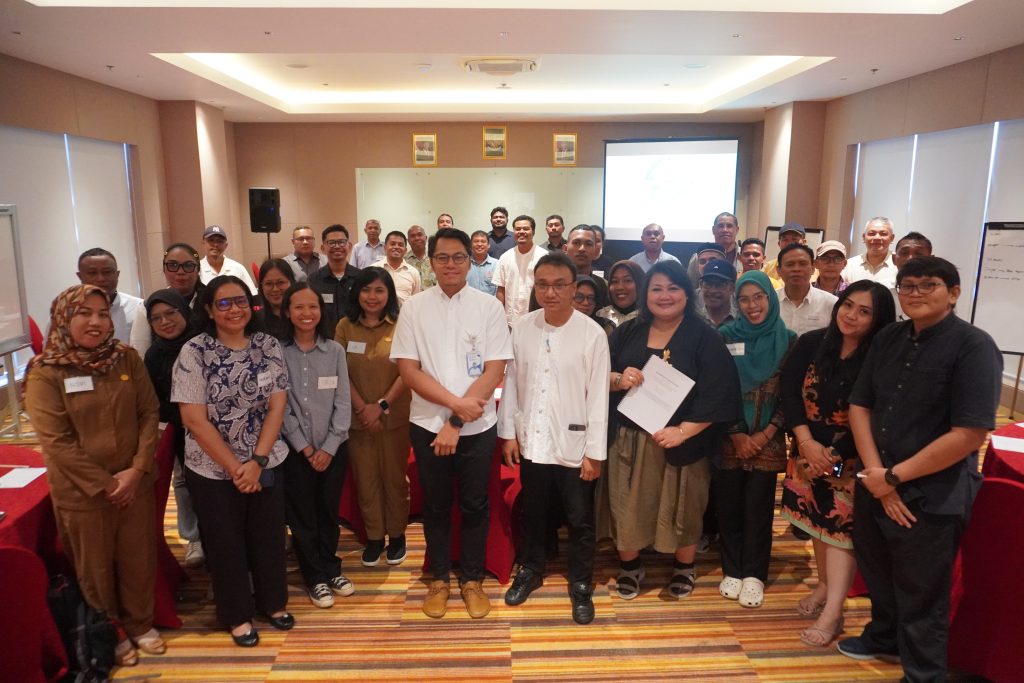
The training forms part of the Pew Marine Fellowship project Enhancing Marine OECM Governance and Outcomes in Indonesia, led by Dr. Hesti Widodo. It supports Indonesia’s commitment to conserve 30 percent of its marine waters by 2045 through Marine Protected Areas (MPAs) and OECMs. The project also builds the capacity of local governments, communities, researchers, and practitioners to identify and support effective area-based conservation outside formal protected areas.
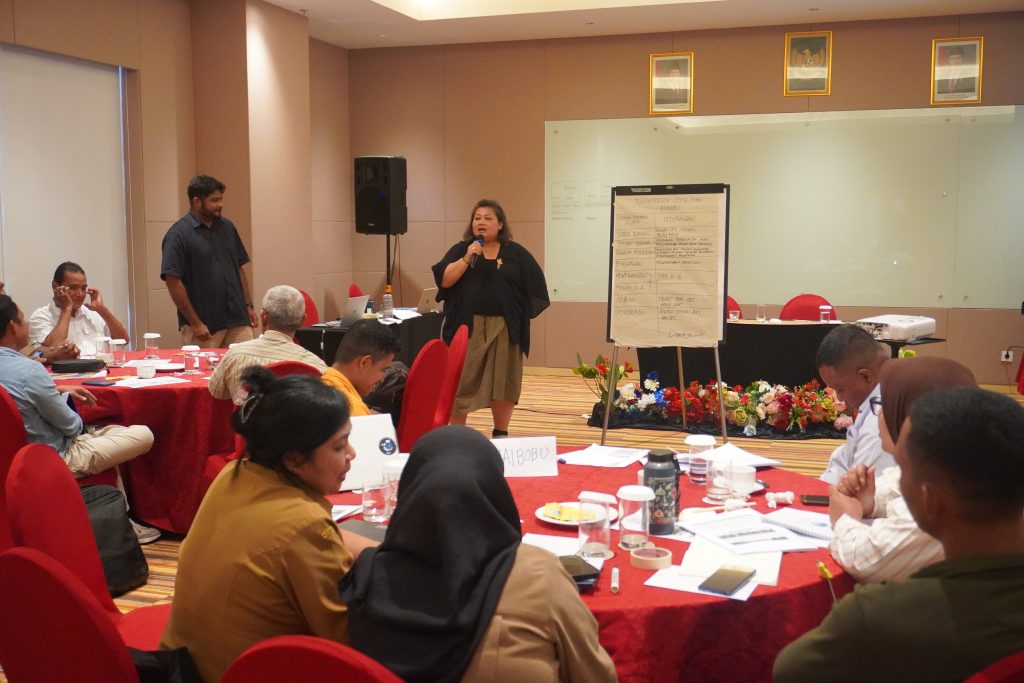
Throughout the training, participants explored the global and national policy context of OECMs, the differences between OECMs and Marine Protected Areas, governance models, eligibility criteria, and how to identify and document potential OECM sites. Through presentations, case studies, role-playing exercises, and collaborative group discussions, participants examined how the concept could be applied within Maluku, where customary governance systems and community-led conservation practices have long shaped how people manage marine resources.
At the beginning of the program, several participants openly expressed concerns about the concept of OECMs and conservation initiatives. Some worried that conservation designation could eventually restrict community access to fisheries, livelihoods, and local economic activities. Others questioned whether OECMs would pile on new regulations or shift decision-making authority away from communities. One participant called OECMs “another externally developed framework” that might overlook local realities and customary governance.
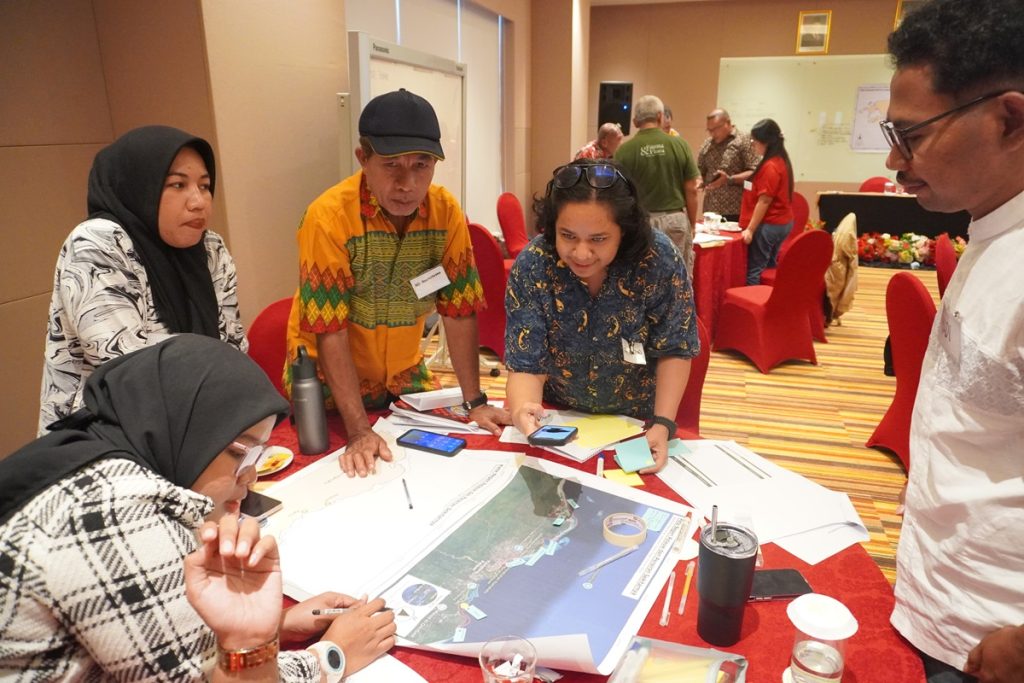
Facilitators didn’t brush these concerns aside. They invited participants to critically examine the concept together. Through open dialogue, participants discovered a key distinction: OECM recognition depends on existing conservation outcomes and the consent of rights holders and local communities. Without community agreement, an area simply cannot become an OECM. This discussion helped clarify that the framework acknowledges and strengthens existing governance systems rather than imposing new restrictions or replacing local authorities.
As discussions progressed, participants began connecting OECMs with customary marine management practices they already knew: sasi laut, nggama, and other locally developed resource management systems across Maluku. Many realized that these longstanding practices have protected marine ecosystems, regulated resource use, and sustained fisheries for generations while reflecting local values and governance. Yet many of these community-led efforts have not received formal recognition despite demonstrating biodiversity outcomes consistent with international OECM principles.
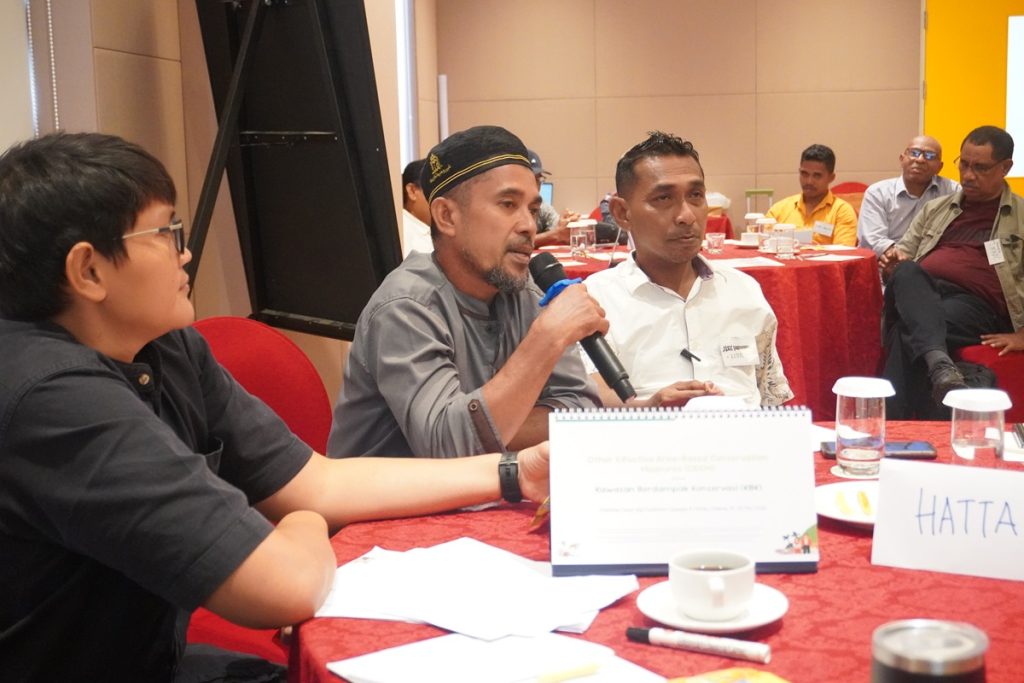
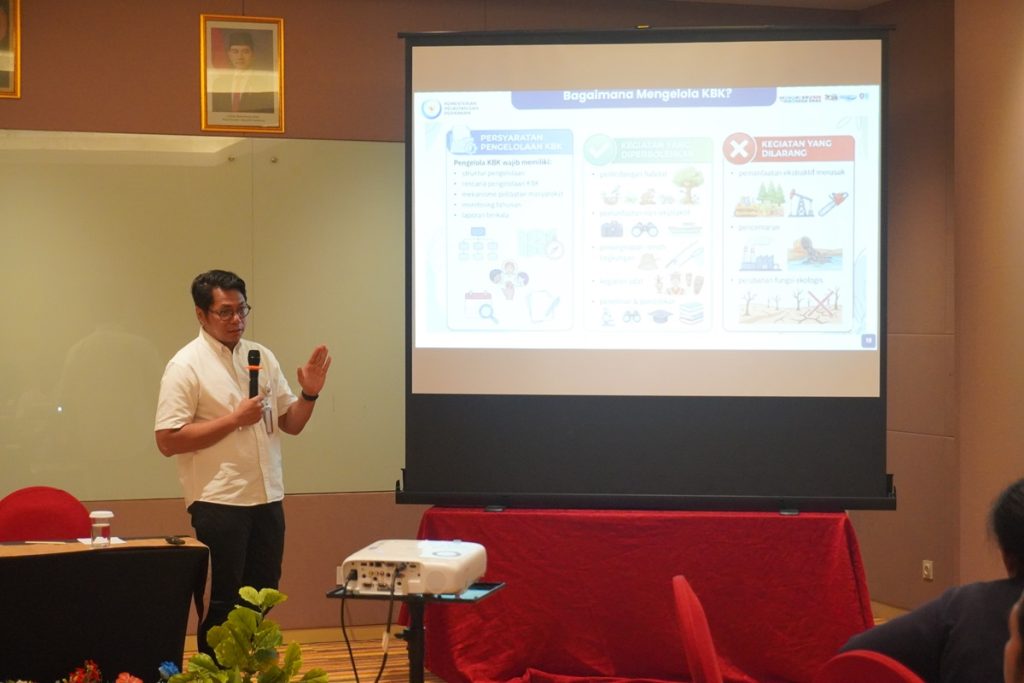
The shift showed. Participants who started skeptical grew more engaged in group discussions, role-play, and case study analyses. Questions gradually evolved, moving from expressing concern over the concept to exploring how customary conservation areas could meet OECM criteria, what documentation would be required, how governance arrangements would be assessed, and what recognition could look like without disrupting their existing management systems. Honest dialogue plays an important role in building understanding and acceptance of new conservation approaches.
The training also highlighted that effective conservation communication depends on connecting scientific and policy concepts with local realities. Participants responded more positively when OECM principles were explained through examples rooted in Maluku’s own conservation traditions rather than delivered as technical terminology. Community-based conservation systems already practiced throughout the province served as clear entry points for communicating broader conservation frameworks, while also reinforcing respect for local knowledge and governance.
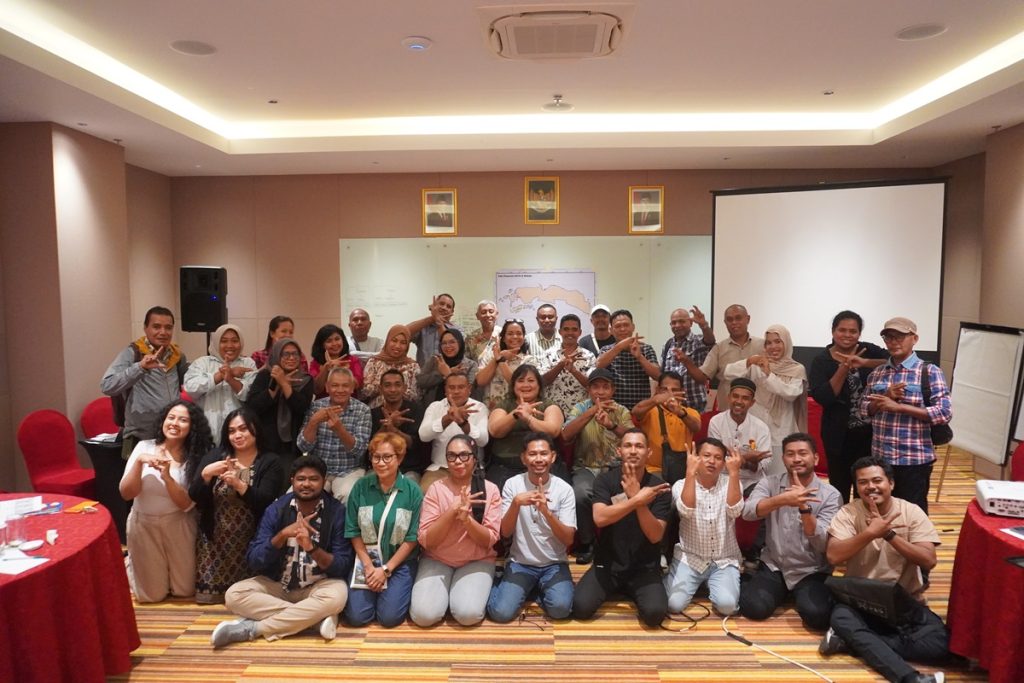
The training showed how stakeholders perceive OCEMs, where misconceptions take root, and how to communicate OCEMs effectively to diverse audiences. Participants were also introduced to konservasilaut.id, CTC’s marine conservation communication platform, as a resource on OECMs, MPAs, and community-based conservation practices across Indonesia. The training demonstrated that introducing OECMs is not just a technical process, but one that demands trust, dialogue, and real engagement with local communities whose conservation practices have protected marine ecosystems for generations.
Writer: Asia Salsabilla
Photos: Asia Salsabilla/CTC