
Coral Triangle Partners Launch Regional Capacity Building Repository to Strengthen Ocean Stewardship Across Six Nations
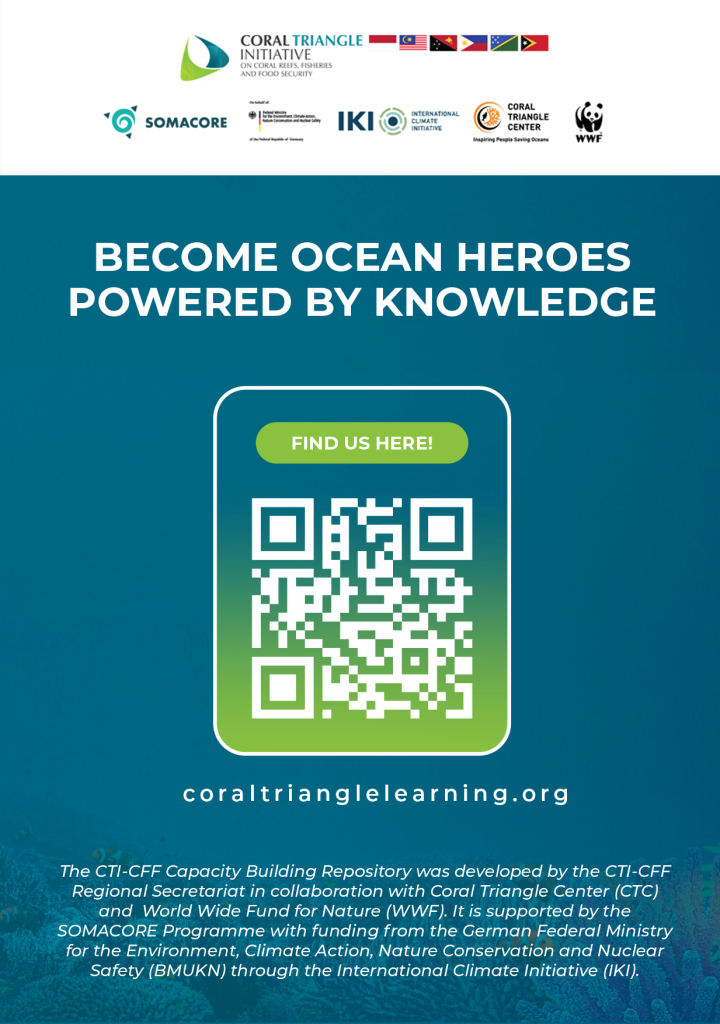
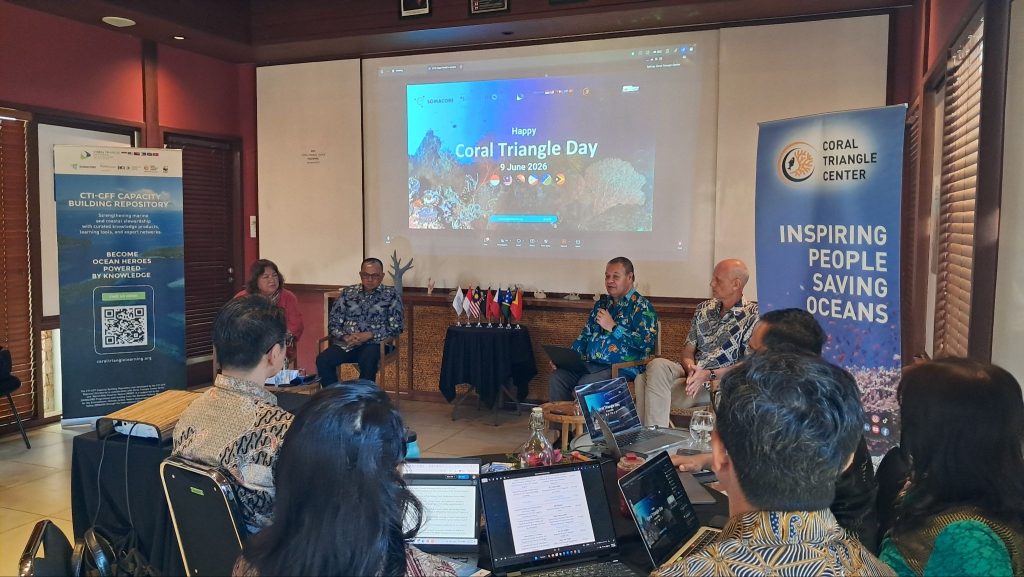
In celebration of World Ocean Day and Coral Triangle Day, a new digital platform was launched on Tuesday, June 9th of 2026, to better connect people, knowledge, and opportunities to protect the Coral Triangle.
Initiated by the Coral Triangle Initiative on Coral Reefs, Fisheries, and Food Security (CTI-CFF), together with the Coral Triangle Center, WWF Coral Triangle Programme, and the Solutions for Marine and Coastal Resilience in the Coral Triangle (SOMACORE) Programme, the CTI-CFF Capacity Building Repository calls on governments, academics, community leaders and conservation and development practitioners to share lessons learned and discover working solutions to address threats facing the Coral Triangle region.
Spanning the waters of Indonesia, Malaysia, Papua New Guinea, the Philippines, Solomon Islands, and Timor-Leste, the Coral Triangle is widely recognized as the global center of marine biodiversity. Home to more than 600 coral species and over 2,000 reef fish species, it contains approximately 76 percent of the world’s known coral species and supports more than 130 million people through fisheries, tourism, food security, coastal protection, and sustainable livelihoods.
However, as marine ecosystems face growing pressures from climate change, overfishing, marine pollution, and unsustainable resource use, strengthening knowledge sharing and capacity building has become more important than ever.
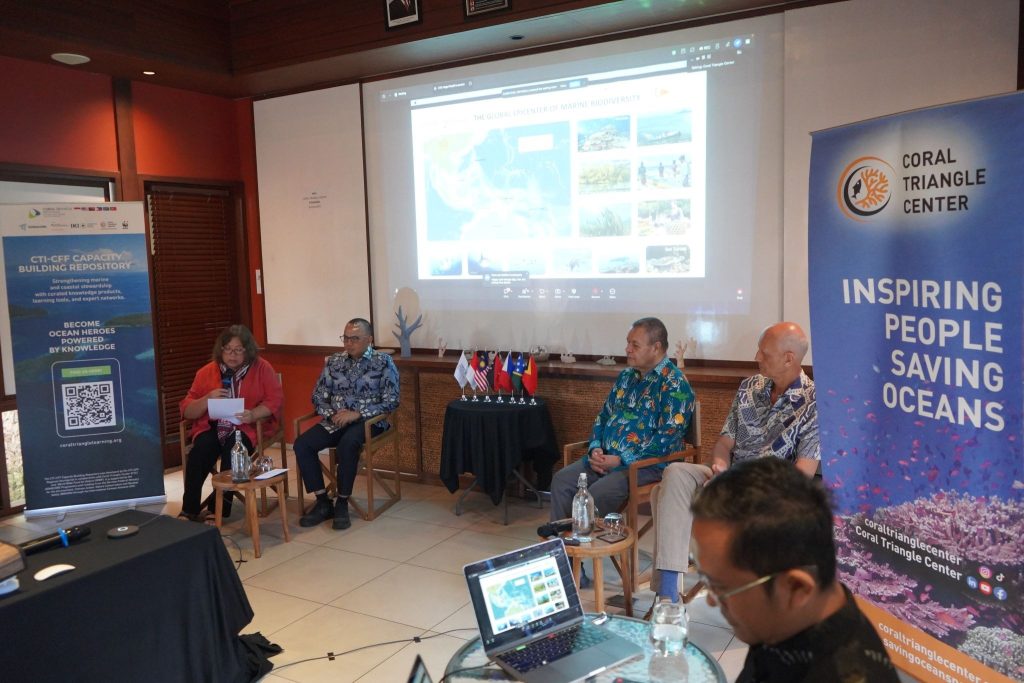
“Despite decades of conservation efforts and the wealth of knowledge generated throughout the region, many valuable resources remain scattered across institutions, organizations, and countries. The CTI-CFF Capacity Building Repository addresses this challenge by bringing together essential knowledge, learning opportunities, and expert networks into a single accessible platform,” said Rili Djohani, Executive Director of the Coral Triangle Center, during the event.
The repository, accessible at coraltrianglelearning.org, serves as an open-access knowledge hub featuring curated best practices, case studies, guidance documents, outreach materials, and other resources aligned with the CTI-CFF Regional Plan of Action (RPOA) 2.0. More than a digital library, the repository serves as a dynamic platform designed to support learning, collaboration, and the development of practical skills for marine conservation and sustainable coastal livelihoods.
“Capacity development is one of the key foundations for achieving the goals of the CTI-CFF Regional Plan of Action 2.0. As the complexity of marine and coastal management continues to increase, the need for accessible knowledge, practical tools, and collaborative learning platforms becomes even more critical,” said IR A. Koswara, Chair of the CTI-CFF Council of Senior Officials & Director General, Ministry of Marine Affairs and Fisheries, Indonesia.
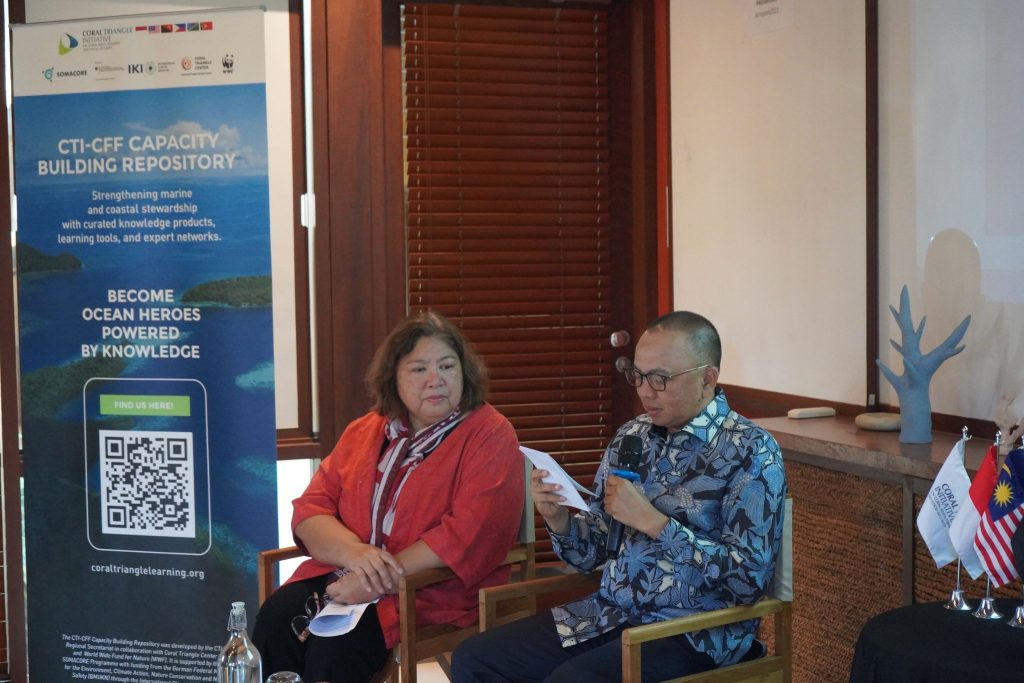
“Indonesia strongly believes that investment in human resources is an investment in the future of ocean sustainability. We hope that this repository will strengthen collaboration among governments, learning institutions, capacity-building providers, local communities, practitioners, and development partners,” he added.
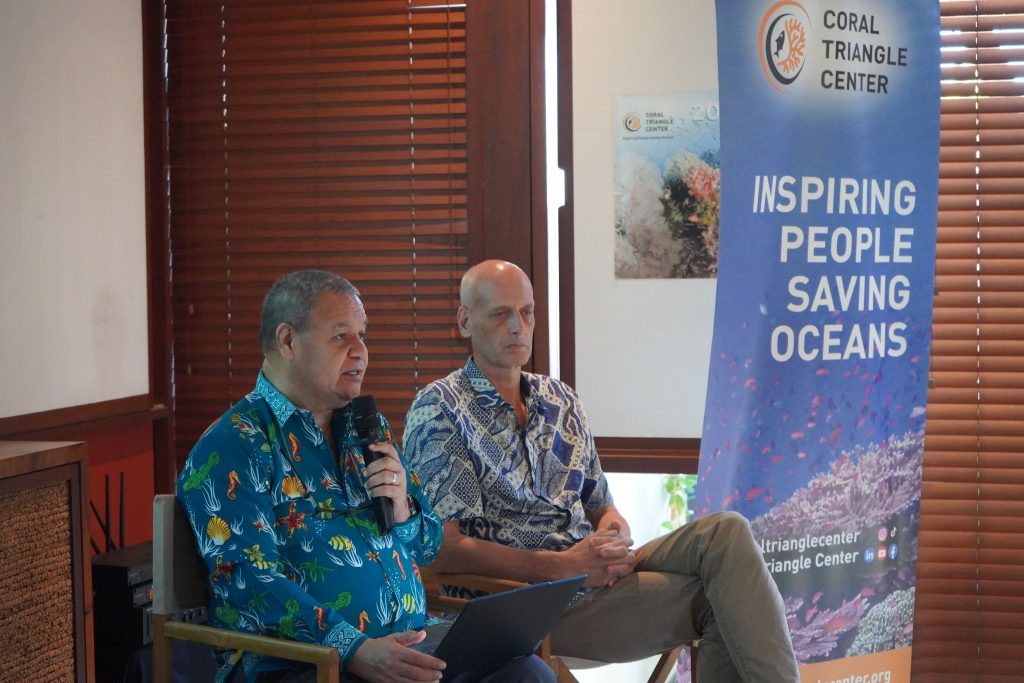
“The repository represents a significant step forward in strengthening regional collaboration and ensuring that practitioners, communities, and decision-makers have access to the knowledge and tools needed to effectively manage marine and coastal resources,” echoed Dr. Frank Griffin, Executive Director of the CTI-CFF Regional Secretariat.
The hybrid webinar, which was attended by 178 participants online and 48 participants onsite representing all six Coral Triangle countries, also featured presentations from regional organizations and conservation partners contributing knowledge products and learning resources to the repository. Speakers highlighted lessons learned from capacity-building initiatives, knowledge management efforts, and collaborative approaches such as peer learning networks to strengthen stewardship across marine and coastal ecosystems.
“Knowledge can only live and pass on through people who share and gain from them. We call on policy-makers, conservationists, community leaders to share lessons learned generously, translate knowledge gained into action, and help replicate solutions at the scale we need to achieve 30×30,” said Klaas Jan Teule, Leader of WWF Coral Triangle Programme.
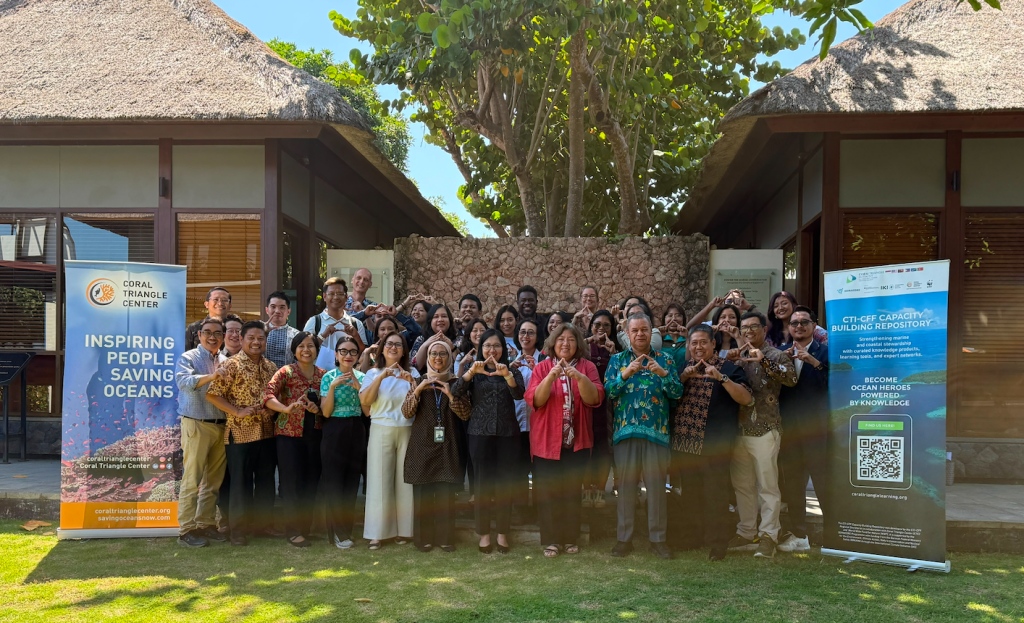
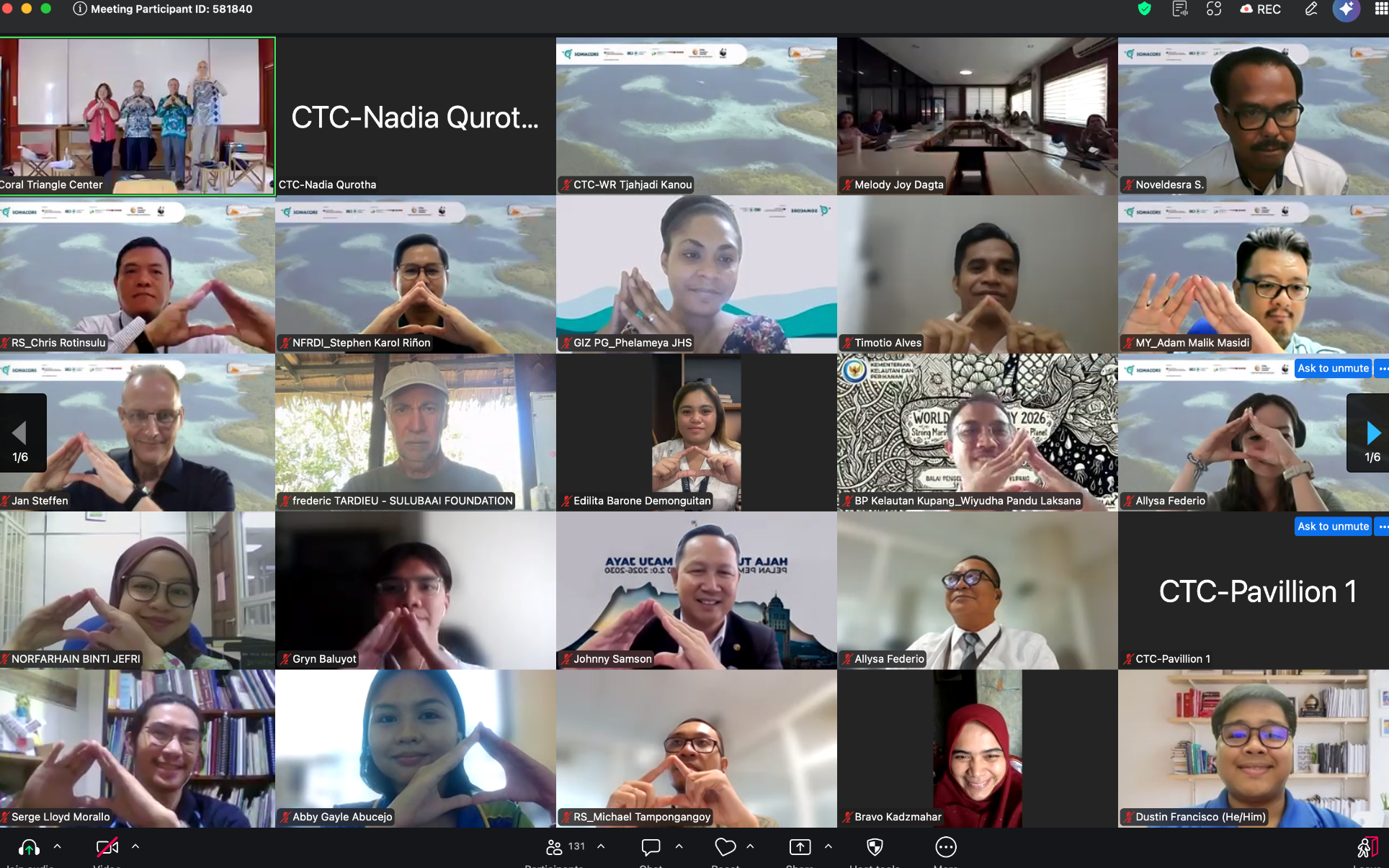
John Erick Avelino, Supervising Ecosystems Management Specialist Coastal and Marine Division, Department of Environment and Natural Resources of the Philippines, also shared several practical training modules that the Philippines has developed and contributed to the repository, acknowledging the repository’s important role in knowledge sharing amongst the six Coral Triangle countries.
The launch forms part of broader efforts by the CTI-CFF Regional Secretariat and its partners to strengthen marine and coastal resilience through regional cooperation, knowledge exchange, and capacity development. SOMACORE is supported by the German Federal Ministry for the Environment, Climate Action, Nature Conservation and Nuclear Safety (BMUKN) through the International Climate Initiative (IKI) and is implemented by partner organizations working across the Coral Triangle countries.
“Symbolic for the inspiring strong partnership among the governments and non-government organisations in the 6 Coral Triangle countries, the new repository makes knowledge and experience more accessible, connecting practitioners across borders,” said Dr. Jan Steffen, the SOMACORE Programme Director. He further stated that the CTI-CFF Capacity Building Repository aims to empower current and new generations of ocean stewards, and to accelerate collective action to protect one of the world’s most valuable marine ecosystems.
By making knowledge more accessible and connecting practitioners across borders, the CTI-CFF Capacity Building Repository aims to empower a new generation of ocean stewards and accelerate collective action to protect one of the world’s most valuable marine ecosystems.
The repository also includes growing contributions from a growing network of regional and international partners. Current knowledge contributors include CTC, IUCN, WWF, Philippines Department of Environment and Natural Resources–Biodiversity Management Bureau, Bureau of Fisheries and Aquatic Resources, The Nature Conservancy (TNC), Yayasan Konservasi Alam Nusantara (YKAN), Konservasi Indonesia, Coral Reef Alliance, and a range of CTI-CFF expert practitioners and regional specialists.
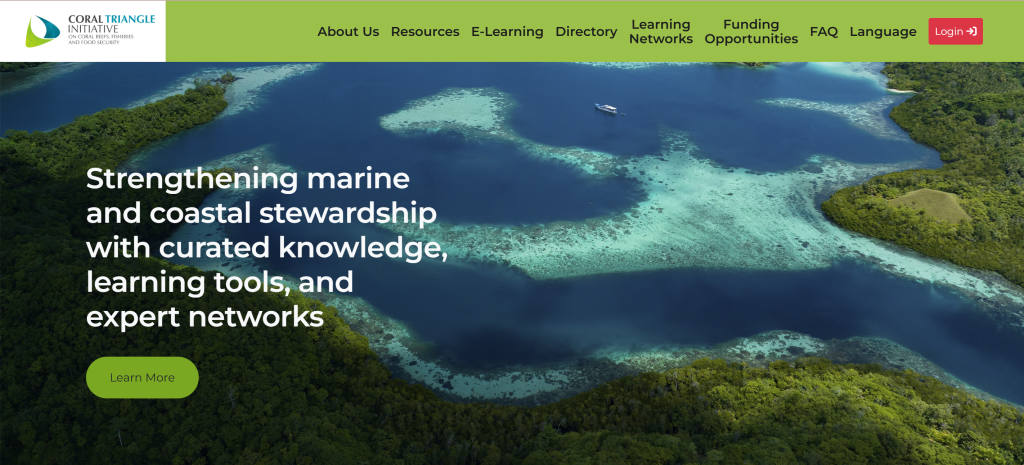
Key features of the CTI-CFF Capacity Building platform include:
- Resource Library – A curated collection of knowledge products, case studies, best practices, and outreach materials reviewed by CTI-CFF and partners.
- E-Learning Portal – Self-paced online courses, videos, and downloadable learning materials accessible via computer and mobile devices, including resources available in multiple regional languages.
- Directory of Expert Practitioners – A searchable database connecting marine and coastal management experts, researchers, and technical specialists throughout the Coral Triangle.
- Directory of Capacity Building Providers – A platform highlighting organizations offering training and professional development opportunities, including government agencies, universities, and non-government organizations.
- Learning Networks Directory – A gateway to regional communities of practice, including networks such as the Marine Protected Area (MPA) Managers Network and the Women Leaders Forum.
- Learning and Funding Opportunities – A regularly updated listing of scholarships, grants, fellowships, training programmes, and other funding opportunities available across the region.
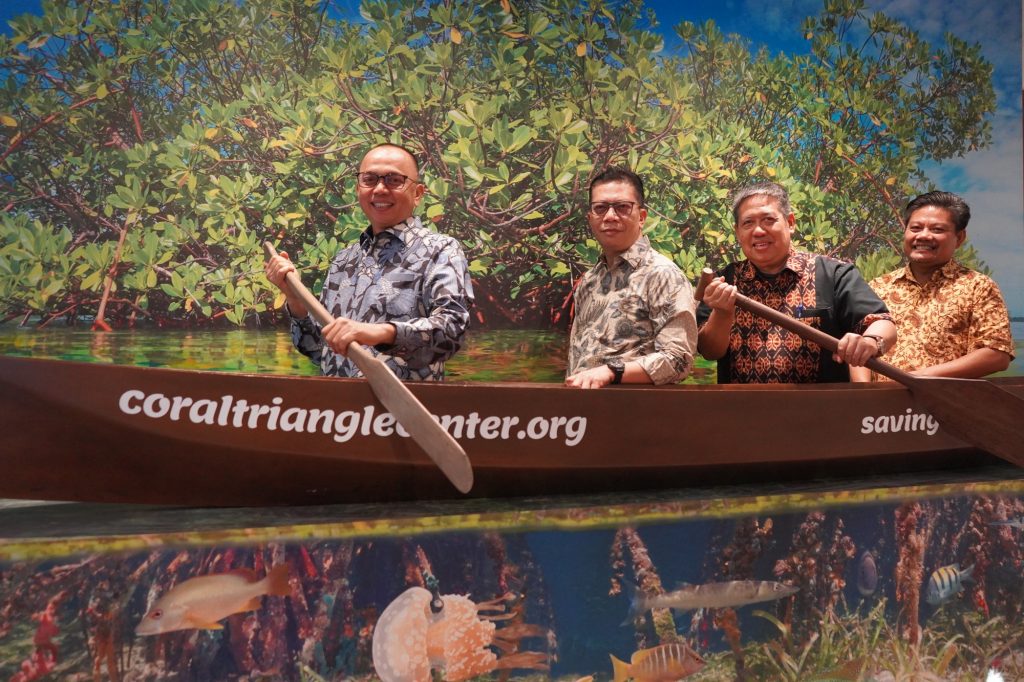
Following the webinar session, Mr. Koswara also visited CTC’s Center for Marine Conservation together with officials from the Ministry of Marine Affairs and Fisheries and the CTI-CFF Regional Secretariat. During the visit Mr. Koswara expressed his appreciation for the innovative approaches and practical conservation work showcased at the center. As it was his first visit to the Center, he shared that the experience provided valuable insights, inspiration, and a deeper understanding of marine conservation practices. The visit highlighted the importance of collaboration, knowledge sharing, and continued investment in capacity development to advance effective ocean stewardship and sustainable marine resource management in the region.
Photos by: Adam Putra/CTC, Kayla Azzahra/CTC