
Maluku Launch Coral Reefs Rehabilitation Network to Scale Local Solutions
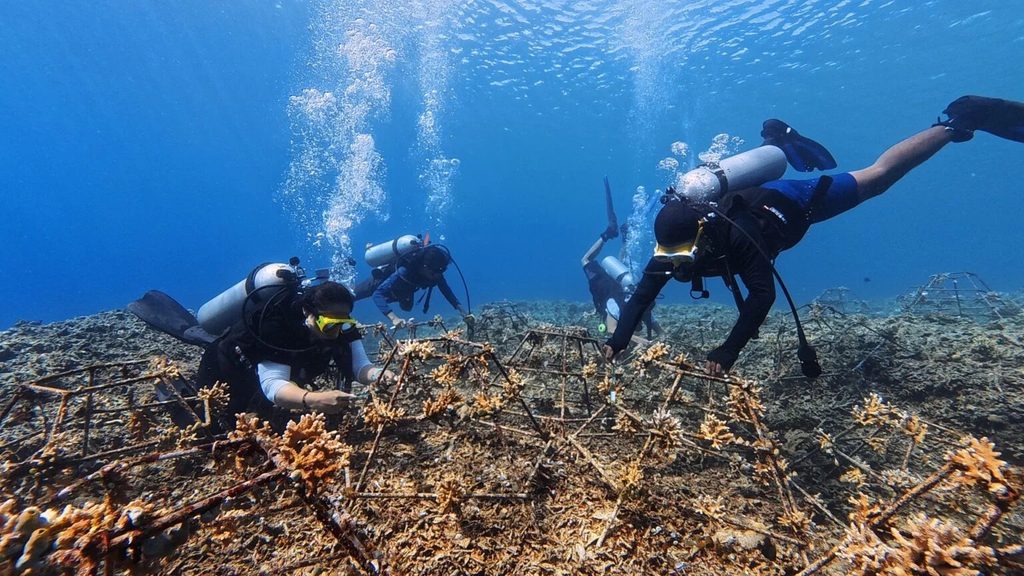
In Maluku, coral reefs face heavy pressures from the climate crisis and destructive fishing practices like bombing and poisoning. Local communities have taken various actions to restore them using diverse methods, but many of these efforts often happen in isolation without proper documentation or shared learning.
To bridge this gap, Coral Triangle Center (CTC) and local non-government organization JALA INA initiated the “Bacarita Rawat Terumbu Karang Maluku” gathering in Ambon on August 1, 2026, bringing together local communities, civil society organizations, and divers to establish the Maluku Coral Reefs Rehabilitation Network and exchange their individual experiences.
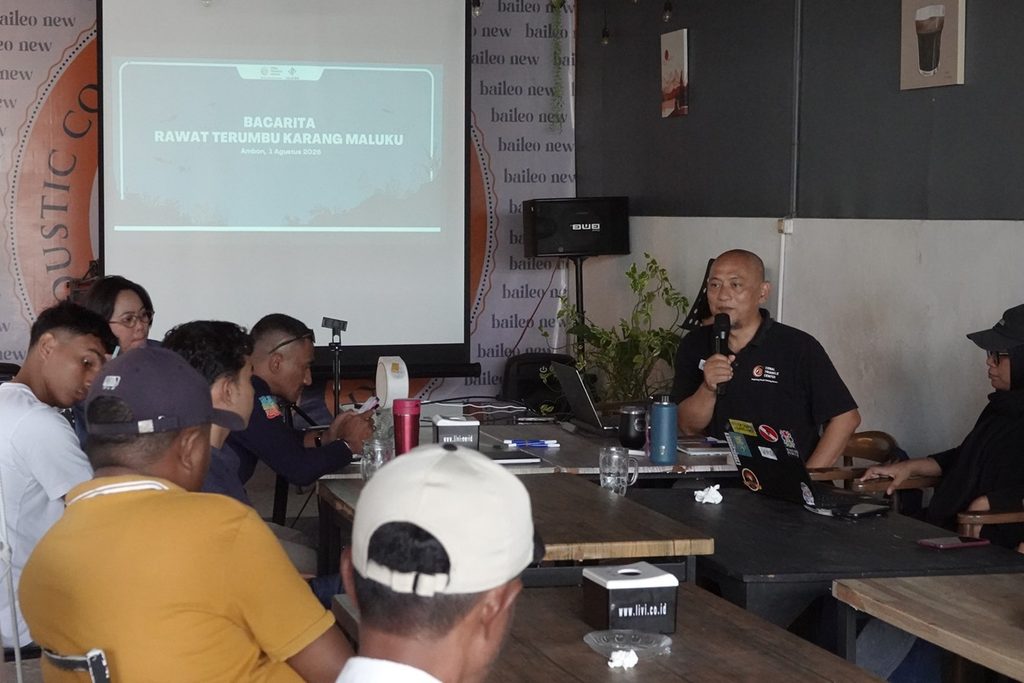
CTC’s Maluku Portfolio Manager, Purwanto, encouraged organizations to share lessons, build networks, and collaborate to strengthen coral rehabilitation efforts for optimal results. “Here, participants can share monitoring results, technical solutions, and open up opportunities for collaboration. The hope is that rehabilitation experiences that have been spread across various areas of Maluku can be connected with one another, thereby encouraging coral reef restoration efforts that are more measurable, sustainable, and based on the active role of coastal communities,” he explained.
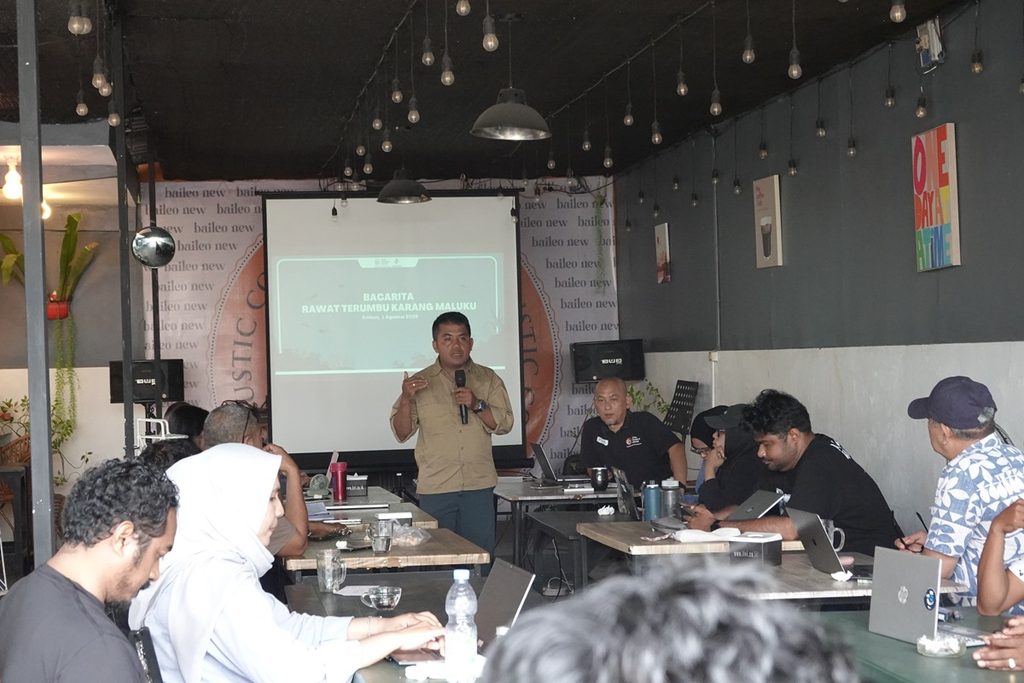
Meanwhile, JALA INA Executive Director, Muhammad Yusuf Sangadji, sees coral reef rehabilitation as inseparable from the lives of coastal communities. According to him, corals are not only part of the marine ecosystem but also support the living space and livelihoods of communities that depend on the sea. “Coral reefs are a place to live. Therefore, when we talk about caring for coral reefs, we are also talking about the living space of coastal communities,” he said.
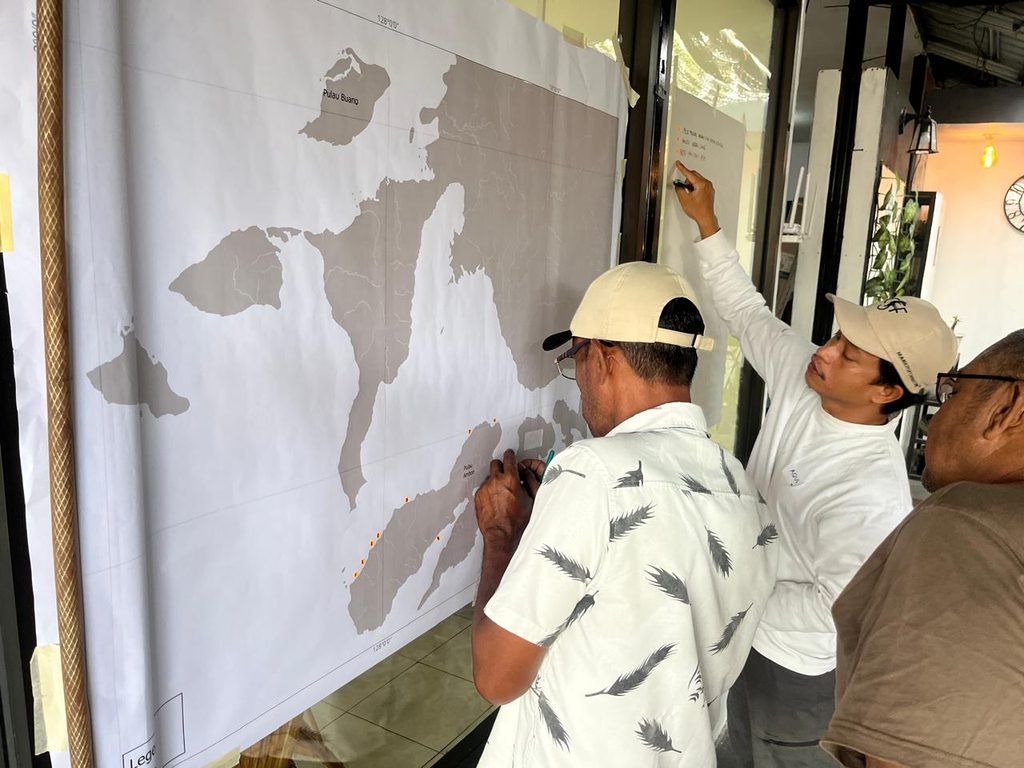
Practitioners at the meeting mapped out more than 15 rehabilitation initiatives carried out by over 15 organizations and community groups across Ambon, the Lease Islands, Seram, Buru, and the Banda Islands. The discussions highlighted that successful restoration requires tailoring techniques to local marine environments rather than applying a single uniform method.
On Buru Island, Zainal Harun Renuat from Bupolo Reef Konservasi used spider-web structures and direct planting at Jikumarasa Beach, producing roughly 1,950 coral fragments with accessible methods that communities can easily maintain without expensive equipment.
In Negeri Lima, Pele Pesisir deployed more than 500 artificial reef units and documented the return of sea urchins and reef fish. In Halong, practitioners used Biorock technology to accelerate coral growth, although it requires considerable costs and an electricity supply. Meanwhile, the Matasiri Diver Community in Pelauw tested multiple types of rehabilitation media, with one method showing good growth of fragments within a year.
Specific water conditions heavily dictate which approach works. There is no single rehabilitation method that can be applied uniformly throughout Maluku. Moluccas Coastal Care adapted its rehabilitation approach in Rutong to withstand the powerful currents and waves coming directly from the Banda Sea. Wave energy, depth, seabed structure, and local monitoring capacity all influence success rates.
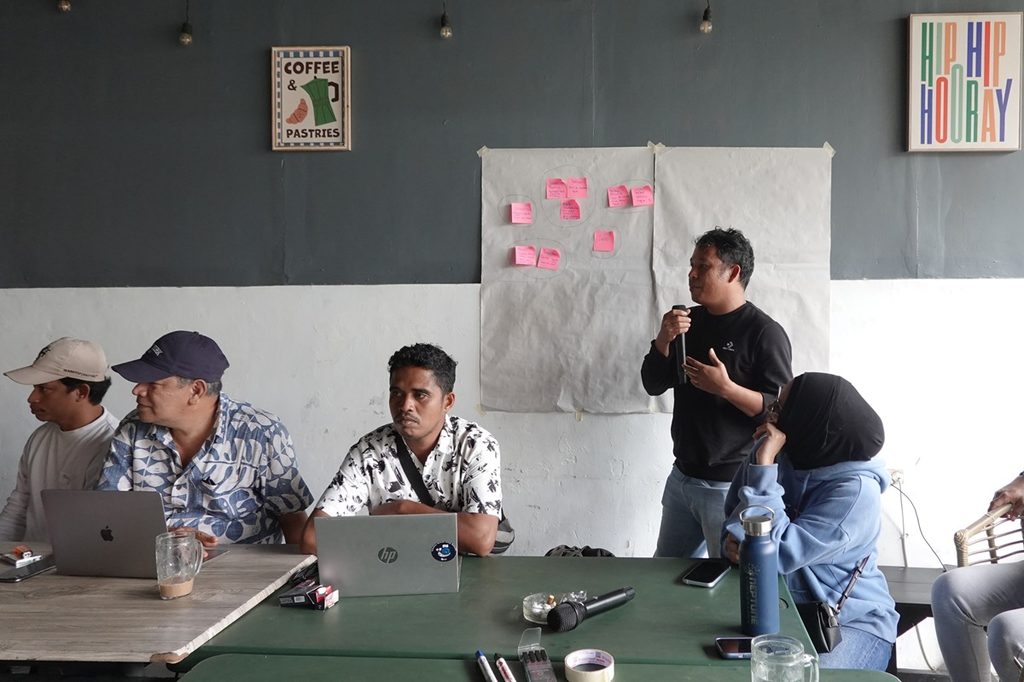
Despite these successes, participants pointed out major operational constraints across sites, specifically limited technical capacity in rehabilitation methods and insufficient post-restoration monitoring and maintenance. These challenges reduce the long-term effectiveness and sustainability of restored sites. Long-term success also hinges on deep community engagement throughout the entire process.
“Communities must be involved from the beginning of planning, because this is directly related to their living space, as coastal and island communities,” said Achmad Munir Wael from Komunitas Malesi in Negeri Liang. He emphasized that local residents must participate in site selection, planning, implementation, and ongoing monitoring so that projects deliver lasting impact rather than ending as brief ceremonial events.
To address these gaps, participants agreed on four priority recommendations: organizing expert-led training and practitioner site visits, strengthening enforcement to reduce degradation drivers, developing village and customary regulations to boost local ownership, and expanding public conservation education.
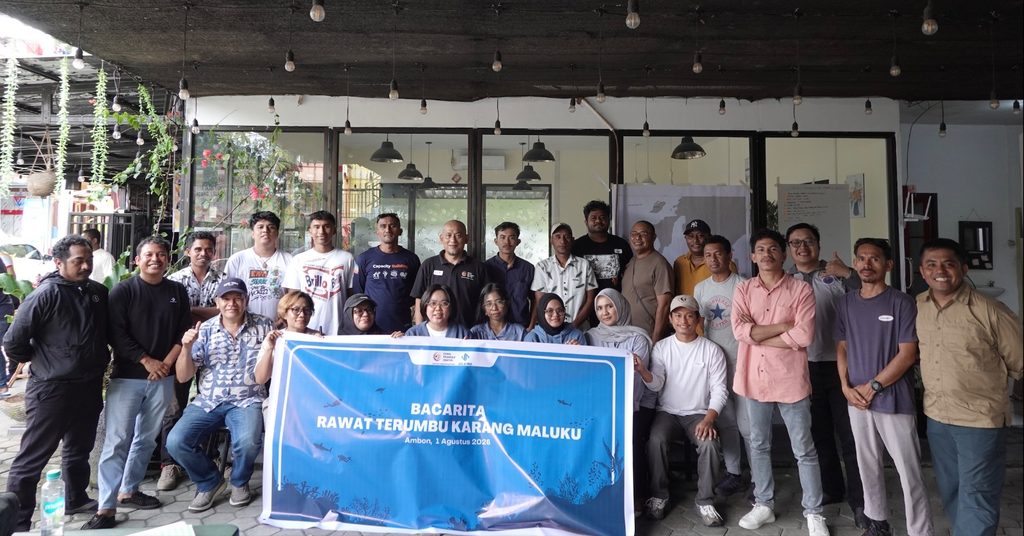
To turn these strategies into action, participants established a learning network for coral reef rehabilitation practitioners in Maluku, launching a dedicated WhatsApp group to maintain communication, exchange knowledge, and plan future collaborative activities across the islands.
Writer: Jaling Sim
Photos: Nyongker/Jala Ina, Muhammad Yusuf Sangadji/Jala Ina