
Restoring Our Climate Shield: Celebrating Marine Protected Area Day with Community Mangrove Planting
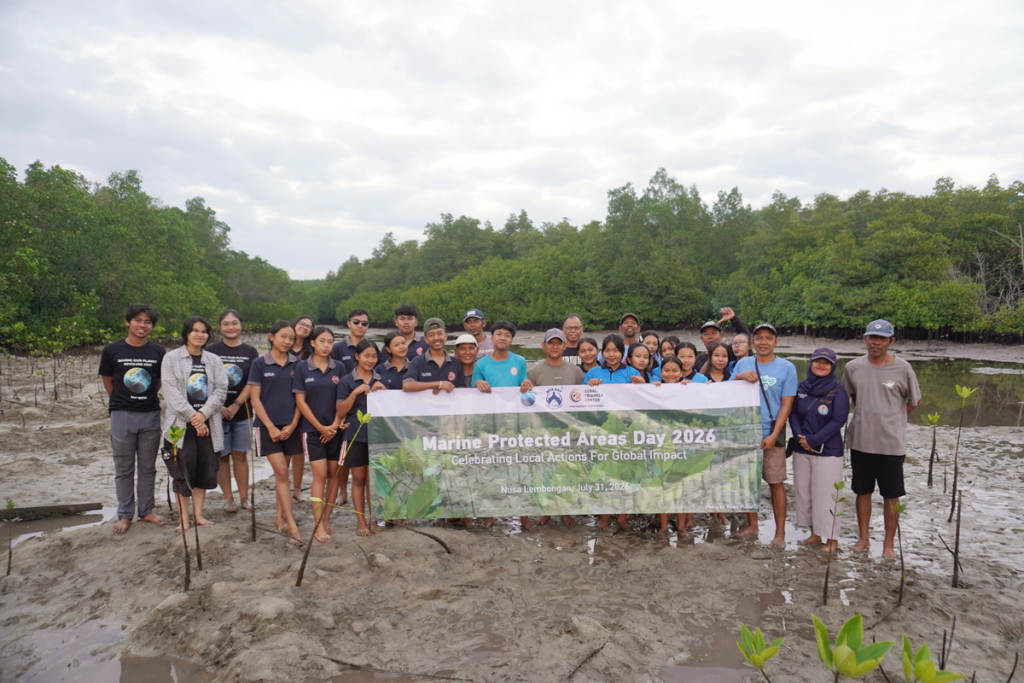
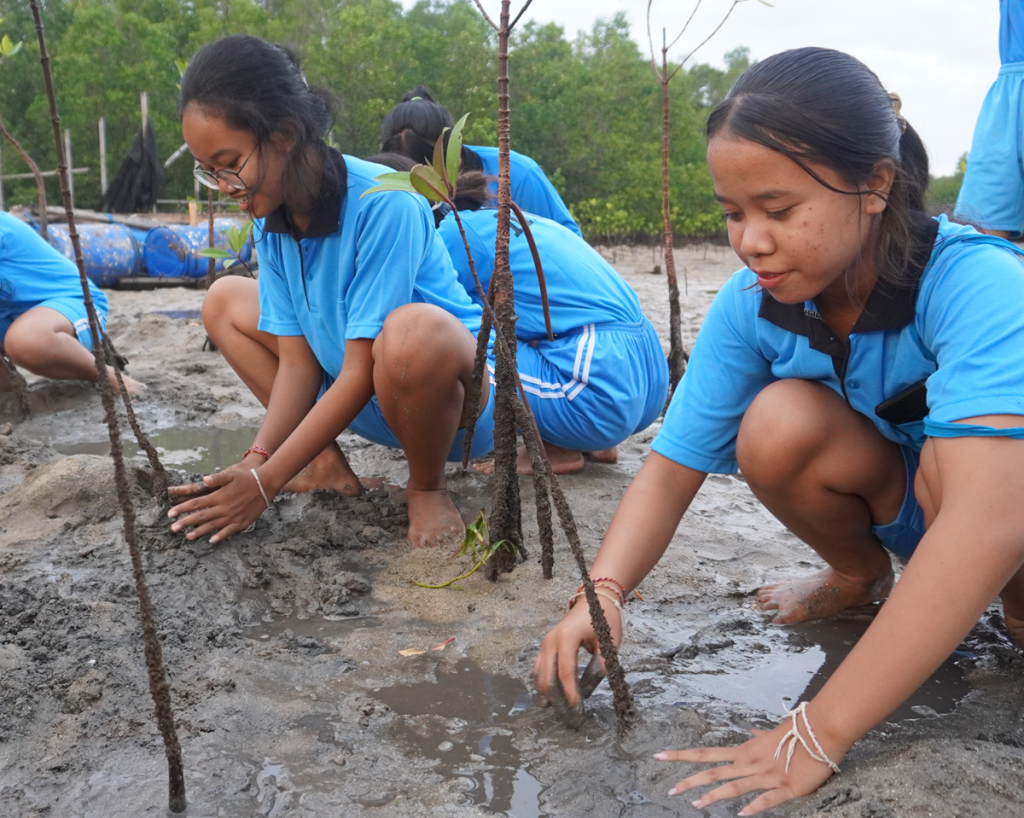
On July 31, 2026, small hands pressed mangrove seedlings into the mud of Nusa Lembongan, marking Marine Protected Areas (MPA) Day and this year’s theme, “Celebrating Local Actions for Global Impact.” The Coral Triangle Center (CTC) gathered local communities and students within the Nusa Penida MPA for a mangrove-planting and education event in celebration of MPA Day.
MPA Day is a global campaign spotlighting the role MPAs play in safeguarding ocean health. Well-managed MPAs safeguard coral reefs, seagrass beds, and mangrove forests, enabling marine life to recover while sustaining the food, livelihoods, and cultural traditions of coastal communities.
For more than a decade, CTC has partnered with governments, local communities, and partners across the Coral Triangle to strengthen MPA management. In Indonesia, that means conservation planning, fisheries management, habitat restoration, and community empowerment. In Nusa Penida specifically, these efforts include coral reef restoration, mangrove rehabilitation, environmental education, and the promotion of sustainable marine tourism. Together, these initiatives proved that successful conservation depends not only on protecting ecosystems, but also on empowering the people who depend on them.
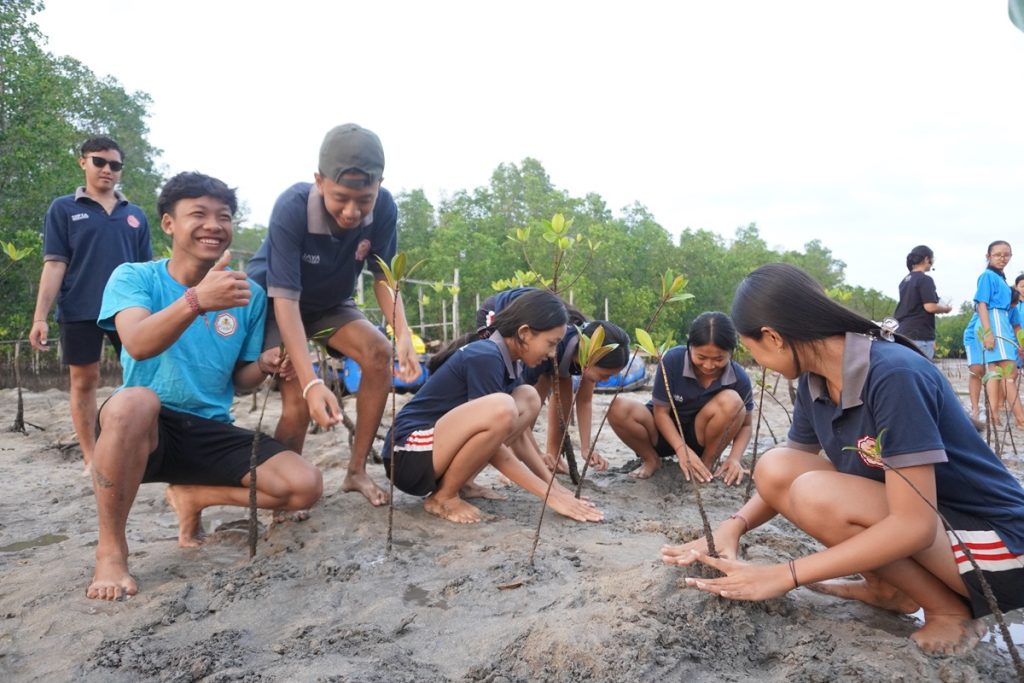
This year’s MPA Day celebration also closed out CTC’s World Mangrove Day campaign, which invited the public to support coastal restoration through the Adopt-A-Mangrove Program from July 21–31. On planting day, the support moved from the screen and entered the ground. Adopted seedlings were planted at CTC’s restoration site in collaboration with local partners and schools.
Mangroves are among the most valuable ecosystems within the Nusa Penida MPA. Their intricate root systems stabilize shorelines, reduce coastal erosion, improve water quality by trapping sediments, and provide nursery grounds for many fish, crustaceans, and other marine species. They are also powerful natural climate solutions, storing significantly more carbon than many terrestrial forests while helping coastal communities adapt to the impacts of climate change. Every mangrove planted and restored strengthens the MPA’s ecological health and the resilience of the people who rely on it.
The event was officially opened by CTC’s Nusa Penida Site Coordinator, Tabitha Rudang, and I Wayan Suarbawa, Vice Leader of Gili Bhuana, who welcomed the 26 participants from the Gili Bhuana Local Community Surveillance Group (Pokmaswas), SMA Negeri Satu Atap Lembongan, and SMA Wisata Darma.
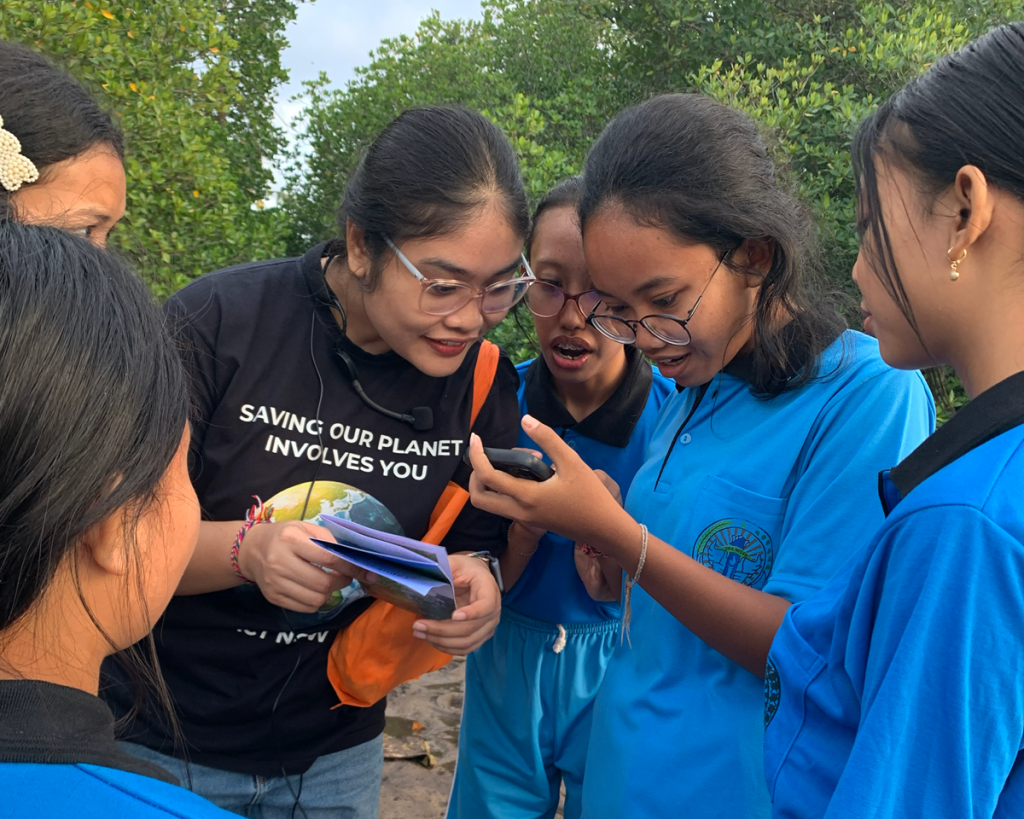
The day continued with an interactive learning session that introduced students to the ecological importance of mangroves and the different species found in Nusa Lembongan. Through games and discussion, they explored how healthy mangrove forests support marine life, protect coastlines, and benefit local communities. Their enthusiasm throughout the session reflected the importance of creating opportunities for young people to connect directly with nature.
For members of Gili Bhuana, involving youth is essential to ensuring conservation efforts continue into the future. One member shared that they hope experiences like this will inspire students to become more actively involved in protecting their island and, one day, join Gili Bhuana in supporting mangrove restoration and other community-based conservation initiatives.
By combining habitat restoration with environmental education, CTC’s MPA Day commemoration demonstrated that effective MPA management extends beyond protecting natural resources. It requires collaboration, local leadership, and a shared commitment to caring for the ecosystems that sustain both people and nature. Every mangrove planted and every young person inspired represents another step toward a healthier, more resilient Coral Triangle.
Writer: Kayla Azzahra
Photos: Kayla Azzahra/CTC, Ali C Saka