
Community Outreach to Strengthen Understanding of Samba Sembilan Marine Protected Area in Timor-Leste
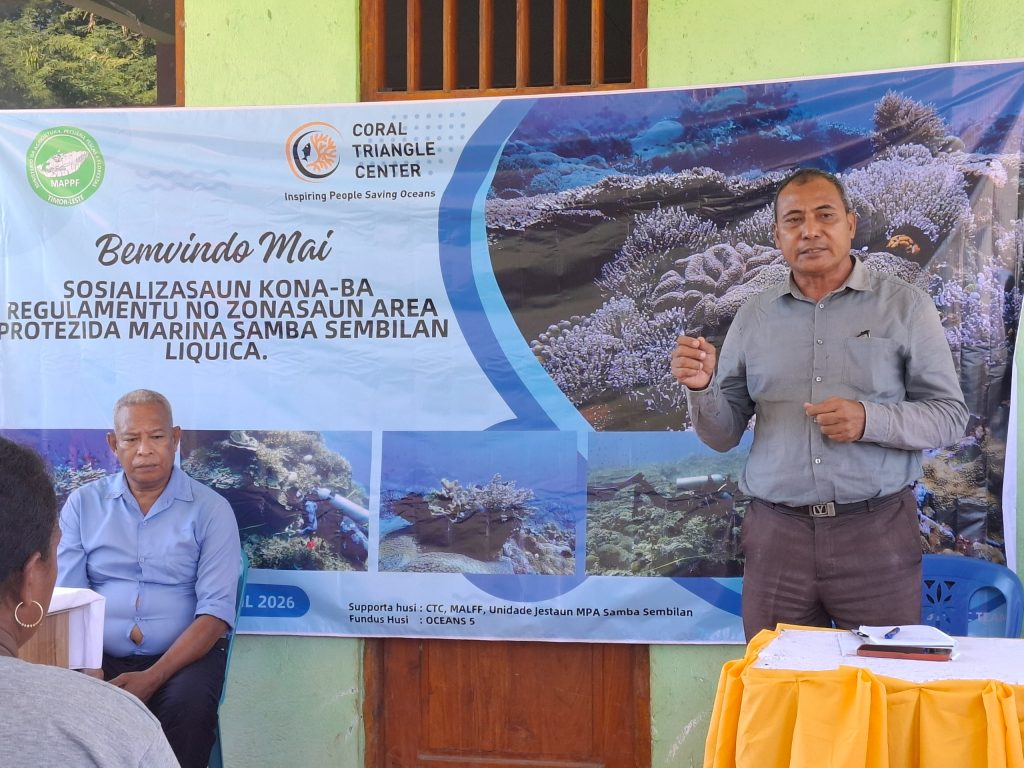
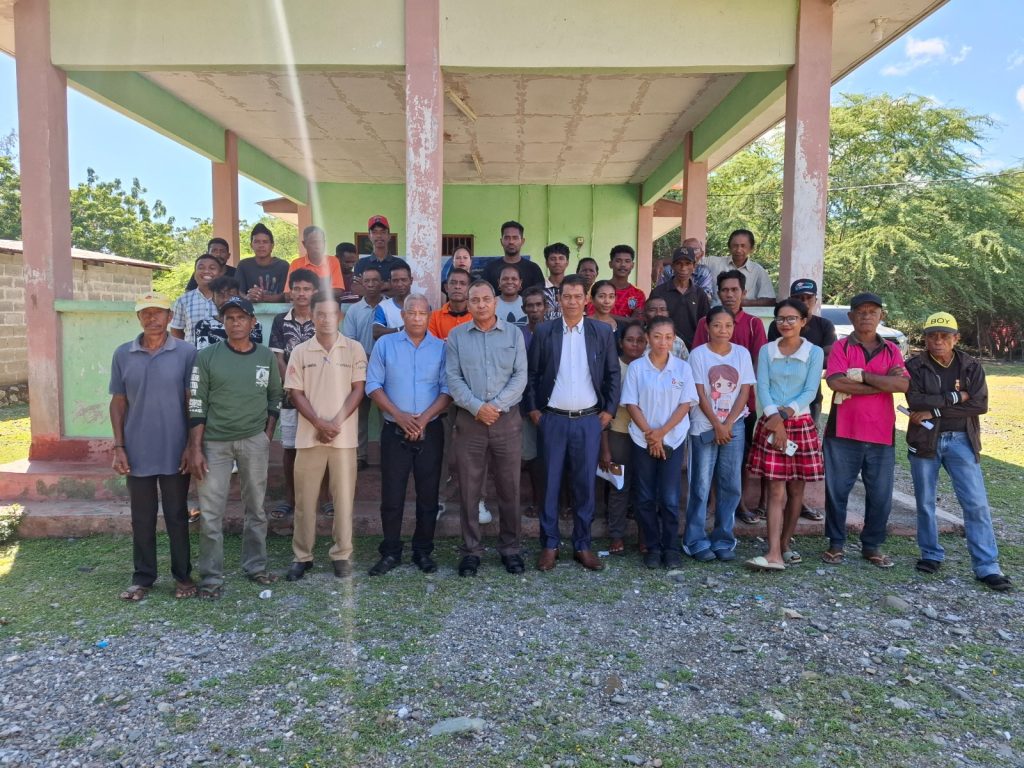
Continuing its efforts to strengthen community involvement in marine conservation efforts in Timor-Leste, the Coral Triangle Center (CTC), in collaboration with the Ministry of Agriculture, Livestock, Fisheries and Forestry (MALFF) and the MPA Samba Sembilan Management Unit, carried out another round of socialization activities on 13-14 April 2026 in Mota-Ulun Village, Liquica Municipality.
The two-day outreach engaged 102 participants from the Fatuligas and Komululi zones, including fishers, women, youth, and local community representatives. Building on the previous socialization conducted in March, this activity remained focused on improving community understanding of the zoning system and regulations within the Marine Protected Area (MPA) Samba Sembilan, while encouraging stronger local participation in the long-term management of marine resources.
The activity also received strong support from national and local government representatives, including Director General of Fisheries Akasio dos Santos and Bazartete Post Administrator Joao Nacimento Braz. Their presence reinforced the importance of conservation messages delivered to fishing communities, local residents, and younger generations in the area.
Throughout the sessions, participants were introduced to key topics such as threats to marine ecosystems, the purpose and benefits of marine protected areas, and the specific zoning rules that apply across different sections of MPA Samba Sembilan. Discussions were designed not only to transfer information, but also to create space for community members to share experiences, concerns, and local knowledge related to marine resource use.
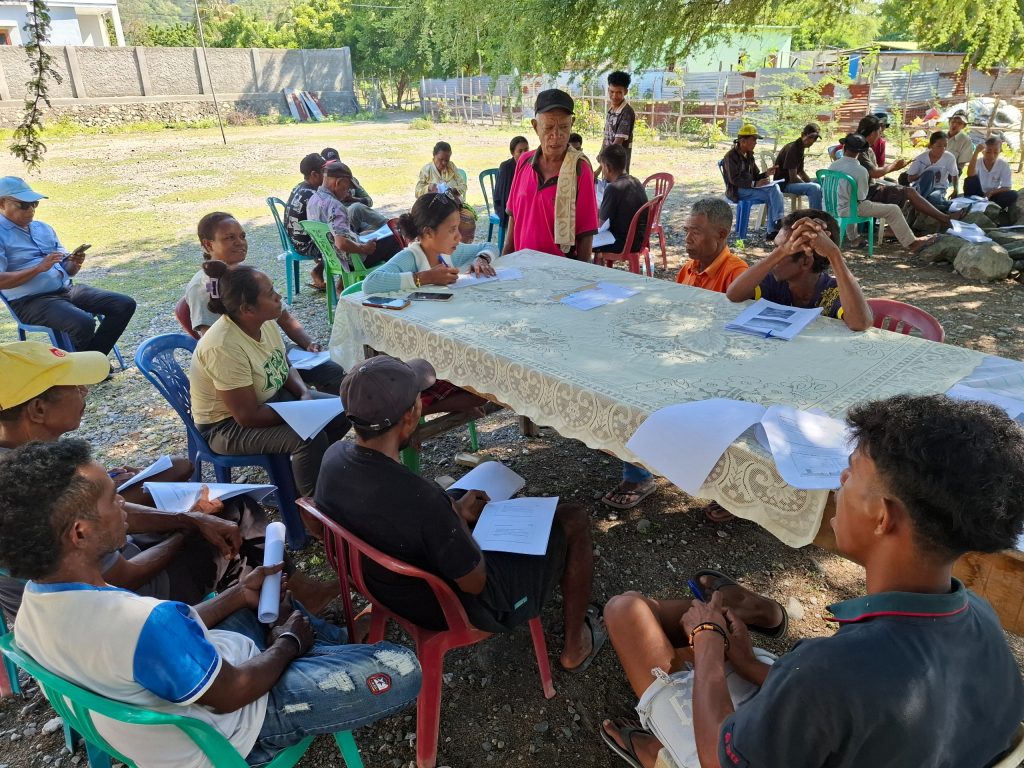
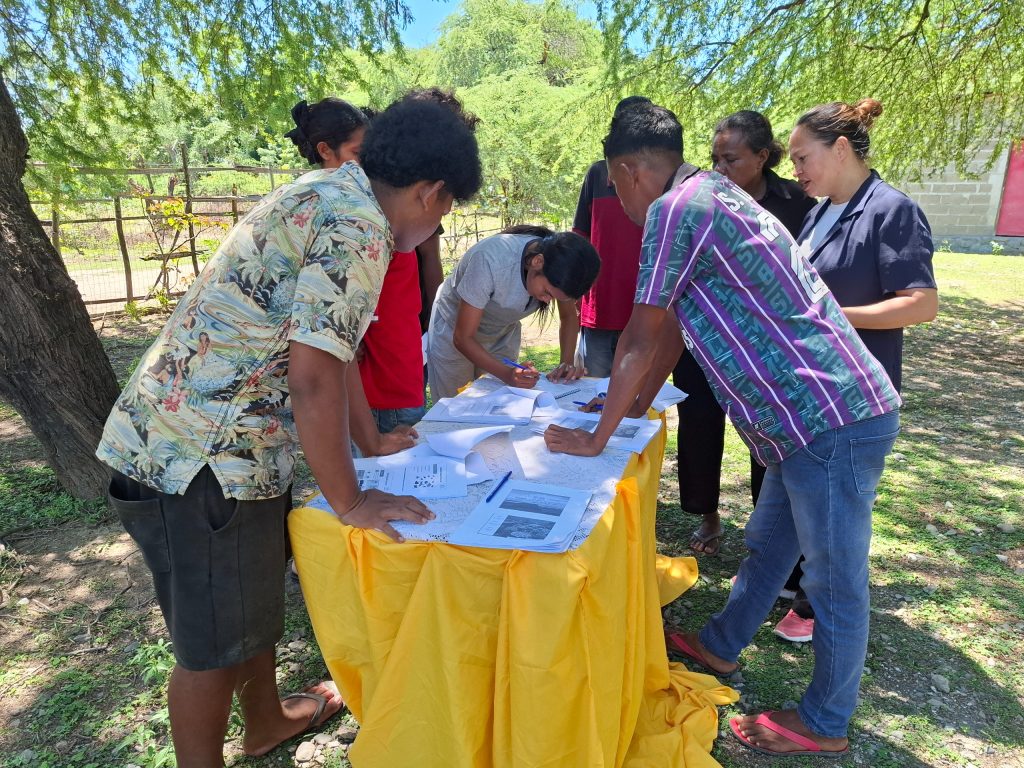
CTC and partners continued to apply a participatory approach that has proven effective in previous engagements. Through open discussions, group work, and presentations, participants were encouraged to take part in identifying marine resource potential, discussing implementation challenges, and formulating a shared understanding of the regulations. This method has been essential in building a stronger sense of ownership among communities toward the conservation area. This approach has been essential in fostering a stronger sense of community ownership and stewardship toward the conservation area.
The April socialization showed positive progress. Participants demonstrated a clearer understanding of the MPA zoning system, conservation objectives, and the regulations that apply in each zone. Just as importantly, enthusiasm from fishers, youth, women, and traditional community figures reflected growing support for marine conservation initiatives and willingness to be involved in future monitoring and implementation.
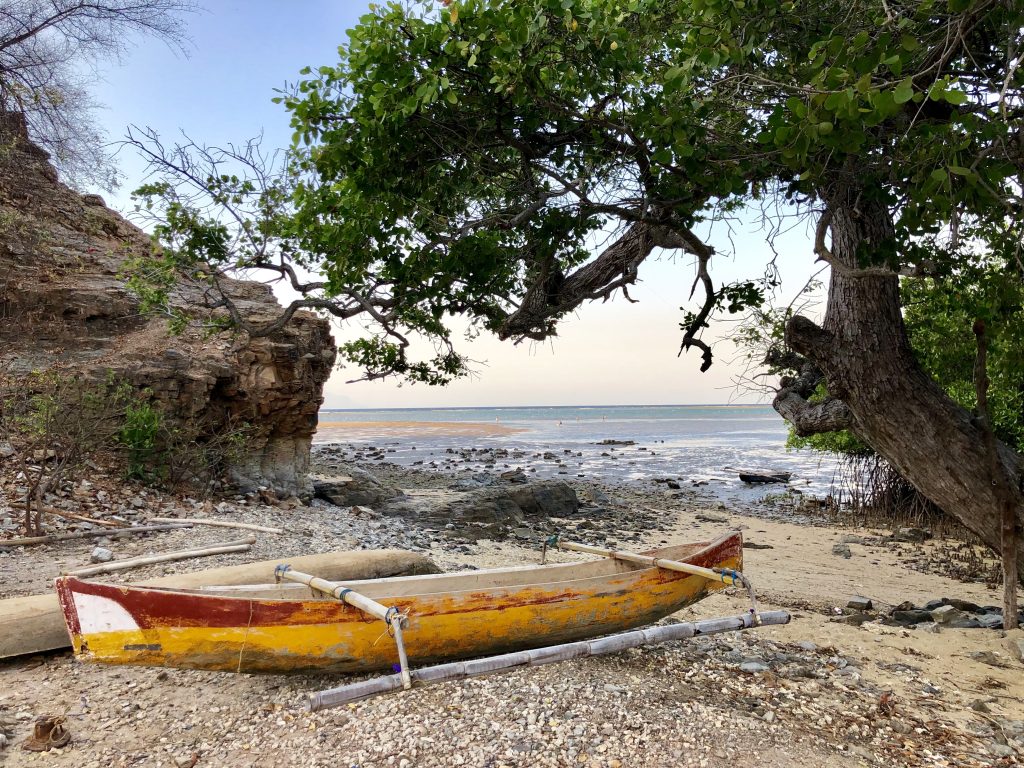
Lessons from both rounds of outreach in Liquica continue to underline that direct socialization and inclusive dialogue are critical for effective MPA implementation. When communities are invited not only to listen, but to discuss and contribute, they are more likely to understand the purpose of zoning and take shared responsibility in protecting marine resources.
As a follow-up, CTC together with MALFF, the MPA Management Unit, and local government will continue expanding socialization efforts to the municipality level and other villages within the MPA Samba Sembilan area. Ongoing assistance, stronger integration of MPA regulations with customary practices, and continued capacity building will be important to ensure that conservation measures are not only understood, but also sustained by the communities who depend on these waters.
Through this continued engagement, CTC and its partners are laying the groundwork for a more participatory and community-supported management system in MPA Samba Sembilan—one that places local communities at the center of marine conservation in Liquica.
Writer: Asia Salsabila, Marthen Welly, Egidio A. Boavida
Photos: Egidio A. Boavida/CTC, Rili Djohani/CTC