
The People Behind the Reef: Five Years of Coral Restoration in Bali
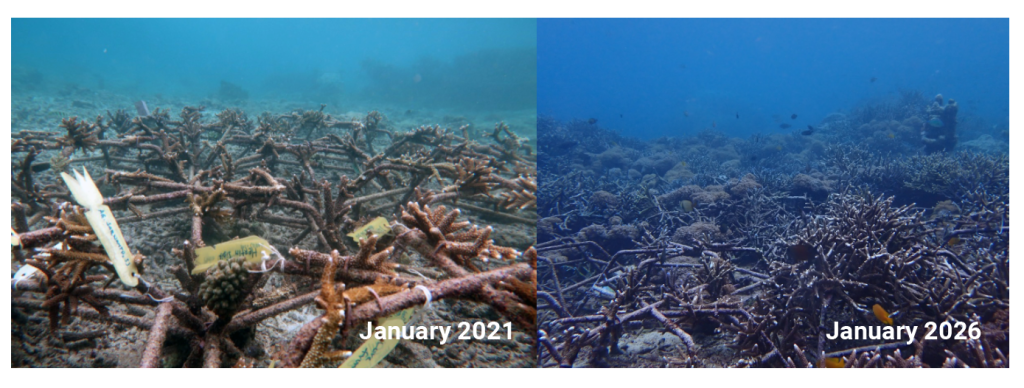
Coral reef restoration is rarely a straightforward path. Storms, bleaching events, disease outbreaks, and human pressures continue to challenge the health of marine ecosystems across the Coral Triangle. Yet beneath the turquoise waters off Nusa Lembongan, something remarkable is happening. Where degraded coral rubble once covered the seafloor, new coral fragments are taking root, growing centimeter by centimeter into a living reef.
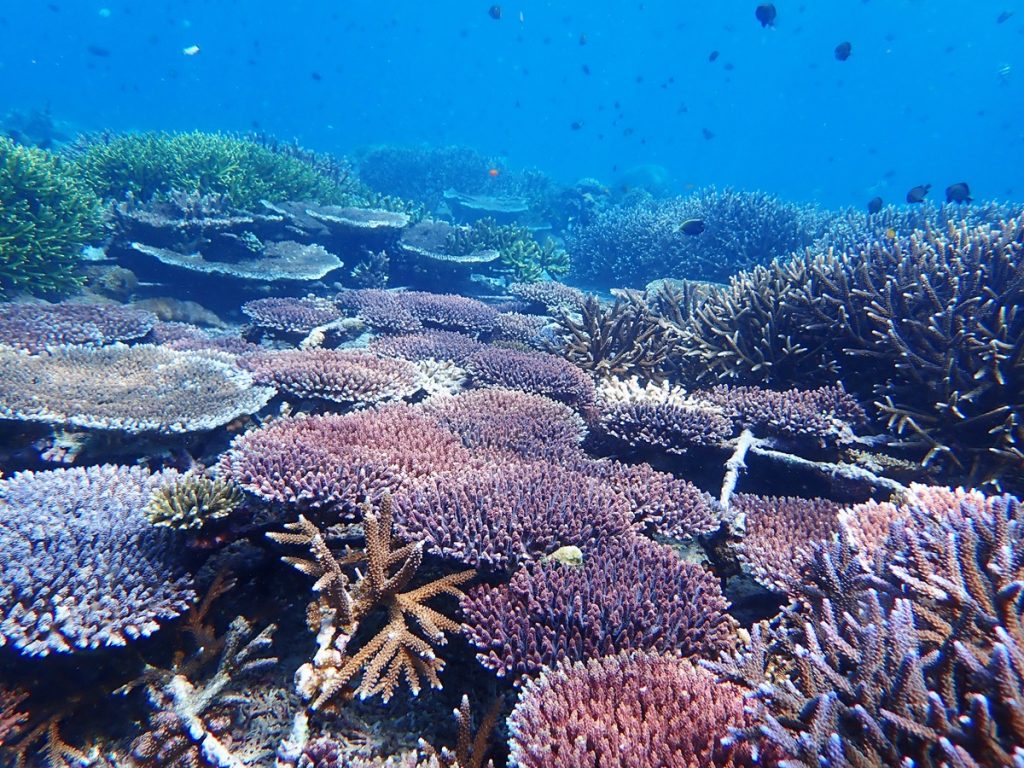
January 2026 marks the fifth anniversary of the Coral Triangle Center’s (CTC) Adopt-a-Coral program. What began as a targeted restoration effort in Ped Village has grown into a multi-site initiative spanning the Nusa Penida Marine Protected Area (MPA), a 20,057-hectare ecosystem critical to the health of Indonesia’s coral reefs. Through local stewardship, science-based methods, and broad public participation, the program continues to demonstrate that long-term reef recovery is possible.
The program uses the Mars Assisted Reef Restoration System (MARRS), which attaches locally sourced coral fragments to steel “Reef Stars”, star-shaped structures coated in resin and sand. These structures are anchored together across the seabed to form a web-like scaffold on which corals can grow and stabilize. The method is especially effective in sites like Mangrove Point, Nusa Lembongan, where strong currents and unstable rubble make unaided coral recovery nearly impossible.
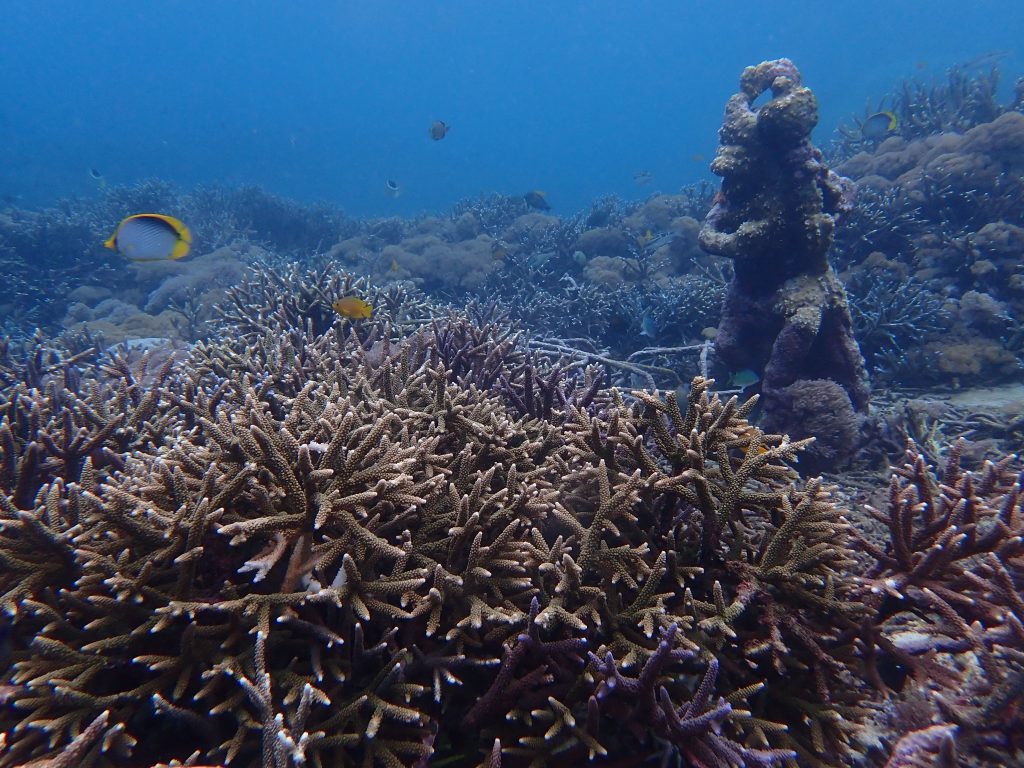
Since the expansion to Mangrove Point, the program has achieved significant progress. Between July 2023 and December 2025, a total of 1,110 coral fragments were adopted and transplanted at the restoration site. By January 2026, 74 Reef Stars had been installed, collectively restoring approximately 44.4 square meters of previously degraded reef habitat. Routine community-led maintenance, including algae removal, coral replacement, and structural inspections, has helped sustain an average coral survival rate of around 80 percent.
“The Adopt-a-Coral program delivers many benefits,” said Marthen Welly, Senior Marine Conservation Advisor at Coral Triangle Center, “from contributing to ecosystem restoration, supporting coral reef conservation within the MPA, creating economic income for the local community, to increasing awareness and education on coral reefs for wider audiences.”
However, progress has not been without challenges. In February 2025, unusually strong waves battered the northern coast of Nusa Lembongan, displacing seven Reef Stars and causing the loss of 105 coral fragments at Mangrove Point. Subsequent assessments also revealed additional damage, including unstable rubble areas, detached coral fragments, and soft coral overgrowth competing with transplanted corals, highlighting the vulnerability of restoration sites to changing environmental conditions.
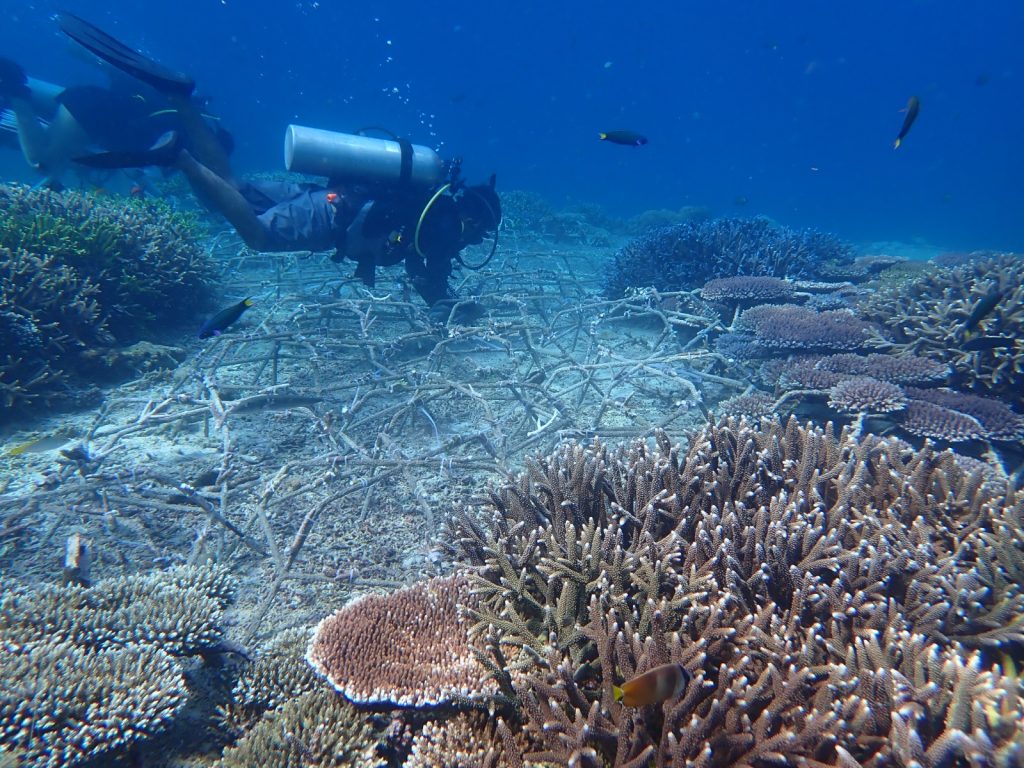
The team responded swiftly. In May 2025, CTC conducted a full redeployment survey, reinstalling seven replacement Reef Stars with 105 new coral fragments. The incident reinforced the importance of adaptive management, prompting the team to deepen monitoring and explore rubble-stabilization techniques to improve the site’s long-term resilience.
Perhaps the program’s most enduring achievement is not measured in square meters, but in people. Maintenance at Mangrove Point is now led by local community members — a model that mirrors the progress already made at Ped Village, where residents independently manage their restoration site after years of training from CTC. To date, approximately 45.8 percent of Mangrove Point’s targeted 96.96 square meter restoration area has been recovered. CTC aims to build on this community-led approach as a foundation for expanding the program to other sites across Bali.
For coral adopters, the impact is deeply personal. “I am so happy to play a small part in preserving Indonesia’s marine ecosystem,” said coral adopter Raditya M. Fadil. “I hope my coral grows strong and healthy, bringing a positive impact on marine life and the surrounding communities.”
As the program enters its sixth year, every coral adopted contributes not only to the recovery of a reef but also to a future in which coastal communities lead the protection of the ocean they call home.
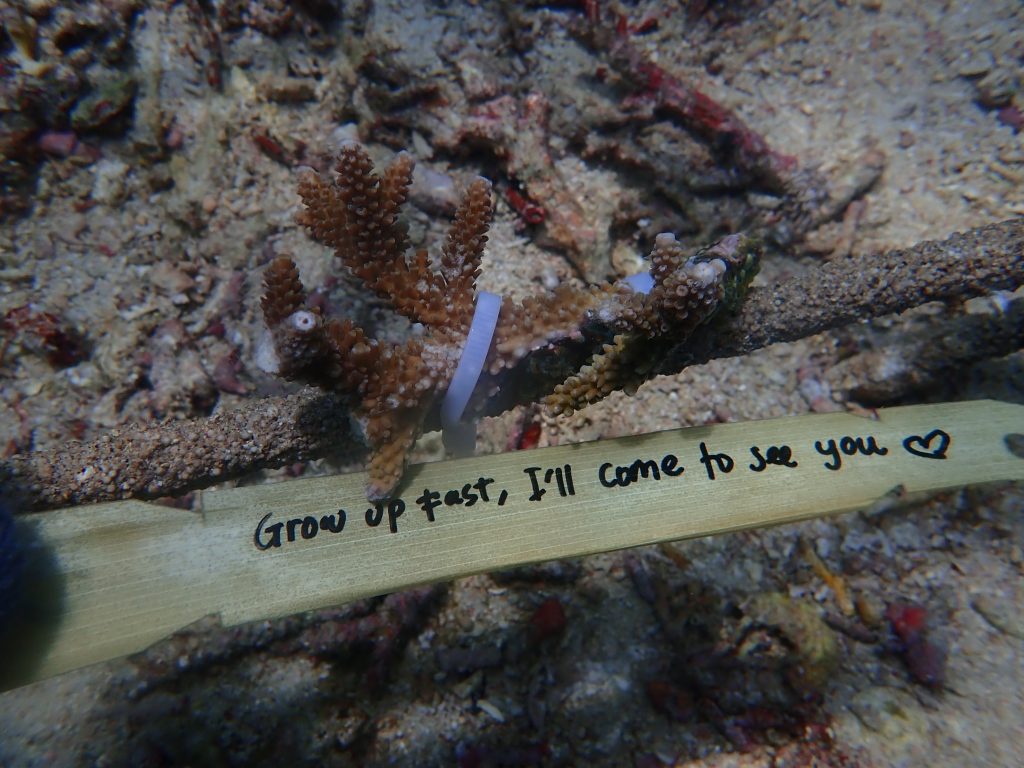
CTC will continue working with communities, partners, and coral adopters to restore reef ecosystems, improve site resilience, and create new conservation opportunities across the Nusa Penida MPA and beyond. Read the full report: bit.ly/AACReport2025_2026
Writers: Jaling Sim
Photos: Wira Sanjaya/CTC