
Indonesia, PNG, and Solomon Islands Come Together to Strengthen Marine Spatial Planning Across Bismarck Solomon Seascape
The Coral Triangle’s marine ecosystems are among the most biodiverse and productive in the world, sustaining millions of people through food, livelihoods and economic opportunities. Yet these vital ecosystems face growing threats from habitat destruction, illegal and destructive fishing, marine pollution and climate change.
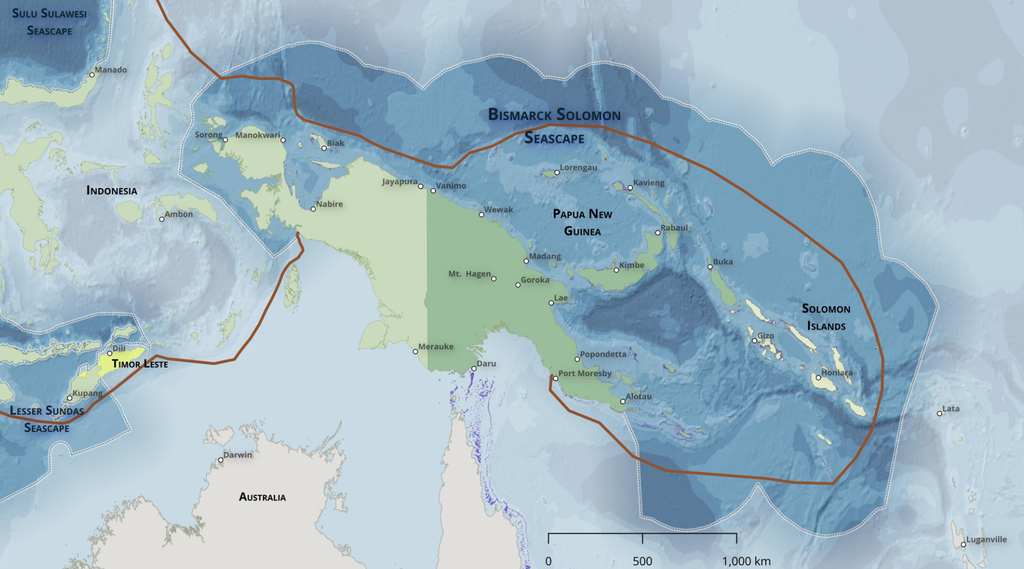
Spanning Indonesia, Papua New Guinea (PNG) and Solomon Islands, the Bismarck Solomon Seascape (BSS) is one of three priority seascapes under the Coral Triangle Initiative on Coral Reefs, Fisheries and Food Security (CTI-CFF). Managing these shared waters is key to protecting marine resources, balancing different ocean uses and sustaining coastal livelihoods.
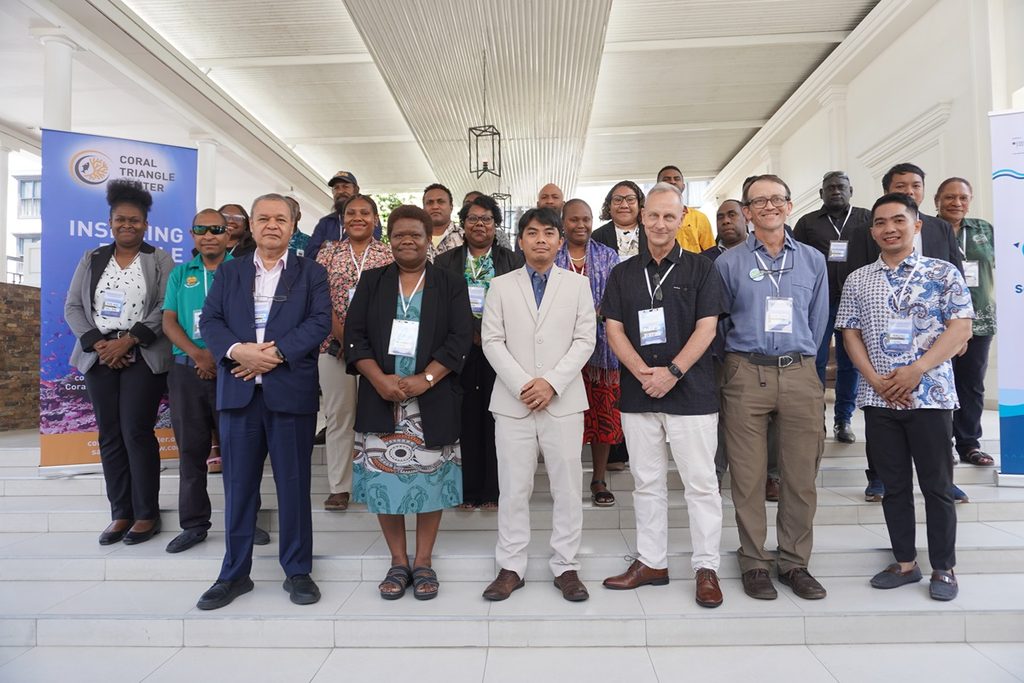
To advance this goal, the Coral Triangle Center (CTC) hosted a Marine Spatial Planning (MSP) training workshop in Port Moresby, PNG, from 29 September to 2 October 2026, in collaboration with the CTI-CFF, the German Agency for International Cooperation (GIZ), and the BMU-IKI funded SOMACORE Project, alongside national partners.
Building practical skills for sustainable ocean management
The four-day workshop brought together 41 participants and contributors, including government representatives, conservation practitioners, academics and technical experts from the three countries. The session built on an earlier MSP workshop for the Sulu-Sulawesi Seascape held in Kuala Lumpur in August 2026.
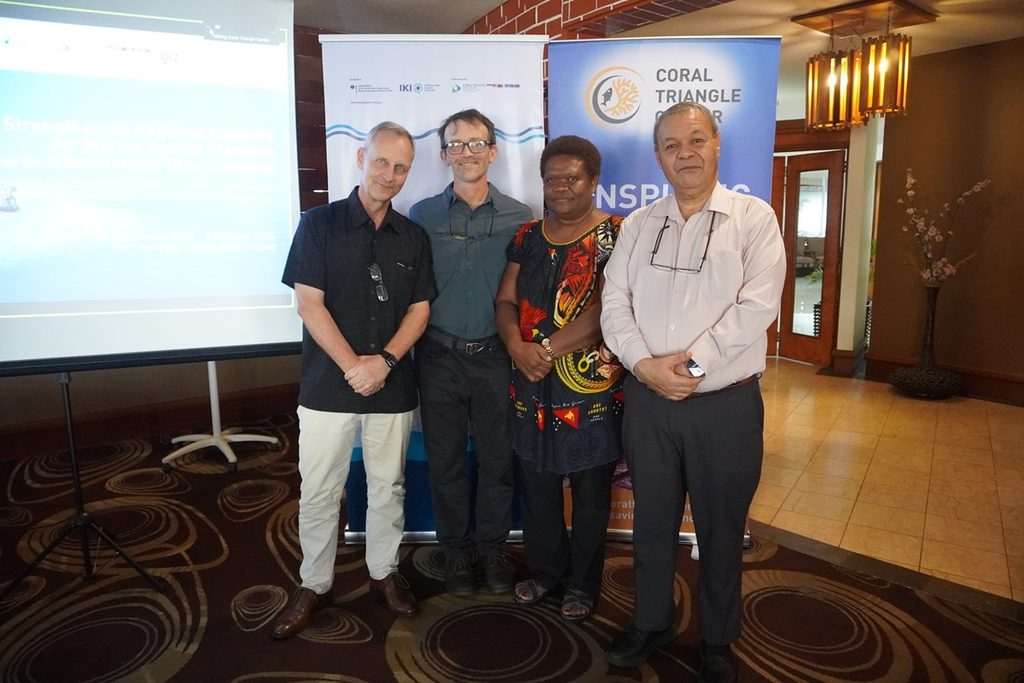
In her welcome remarks, CTC Executive Director Rili Djohani emphasized the importance of an integrated approach to ocean management. “Marine Spatial Planning is about more than drawing boundaries on a map. It is about bringing countries, sectors and communities together to balance conservation and sustainable use. By strengthening collaboration across Indonesia, Papua New Guinea and Solomon Islands, we can better protect our shared marine ecosystems and secure the livelihoods of the communities that depend on them.”
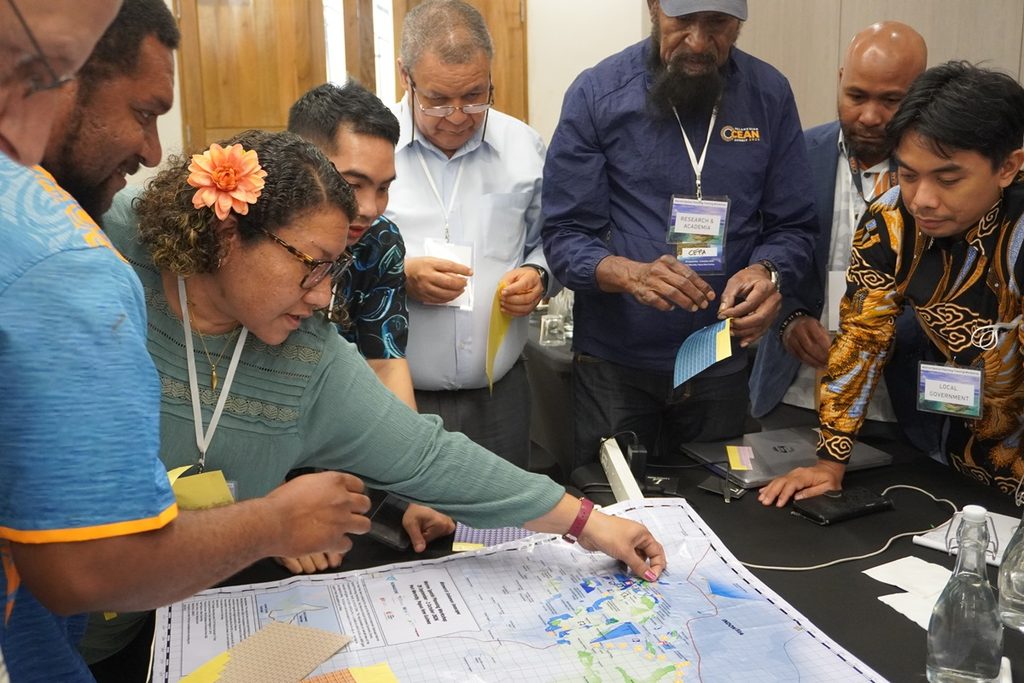
Led by MSP specialist Nate Peterson, the workshop focused on practical skills participants could apply in their respective roles. Through expert presentations, country case studies, group exercises and action planning, participants explored governance and policy frameworks, stakeholder engagement, marine zoning, spatial data and decision-support tools, implementation, and monitoring and evaluation.
Yvonne Tio of PNG’s Department of Environment, Conservation and Climate Change, and Convenor of the CTI-CFF BSS Sub-Seascape Working Group, highlighted MSP’s role in addressing competing interests in shared marine spaces. “Marine spatial planning is very important for the BSS countries. By identifying different uses of ocean space and the stakeholders involved, MSP can help prevent resource conflicts and address competing interests across Indonesia, Papua New Guinea and Solomon Islands,” she said.
CTI-CFF Regional Secretariat Executive Director Dr. Frank Griffin underlined the importance of regional efforts to work together. “The CTI-CFF brings partners together to strengthen capacity and share knowledge across the region. Through initiatives like this workshop, with support from CTC and SOMACORE, we can build the skills needed to advance Marine Spatial Planning in line with national priorities,” he said.
Learning from national experiences
The workshop provided a platform for exchanging expertise and exploring how national approaches could inform marine management across the seascape, as each country is at a different stage of MSP development.
Indonesia shared its established framework of legally binding marine spatial plans covering its entire Exclusive Economic Zone, demonstrating how planning can guide marine uses while addressing competing interests and incorporating public consultation.
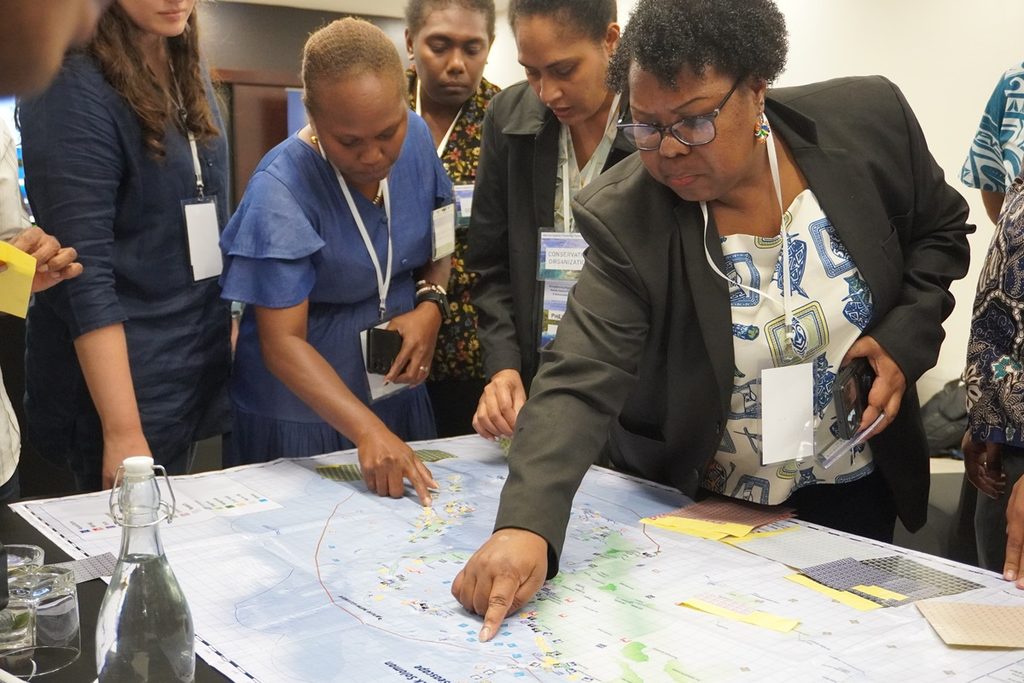
While, Solomon Islands presented progress building on the Marine and Coastal Biodiversity Management in Pacific Island Countries project and its National Oceans Policy – draft management zones now cover the country’s Exclusive Economic Zone, a coordination mechanism involving 12 government ministries.
For PNG, the workshop highlighted an opportunity to leverage existing conservation assessments, its National Oceans Policy, and the Maritime Zones Act to initiate a formal national MSP process.
Participants also emphasized the importance of interagency coordination and meaningful community engagement, particularly given the central role of customary marine tenure and subsistence fishing in Melanesia.
Turning regional priorities into action
A key outcome was the agreement that each country should continue advancing its national MSP efforts while coordinating in transboundary areas. This approach would allow countries to align management priorities and zoning where their maritime boundaries meet without requiring a single integrated plan for the entire seascape.
Assaneth Buarafi of Solomon Islands’ Ministry of Fisheries and Marine Resources underscored the importance of this approach for managing migratory marine species and addressing transboundary challenges. “It’s important to see how these countries can work collaboratively to address these issues,” she said.
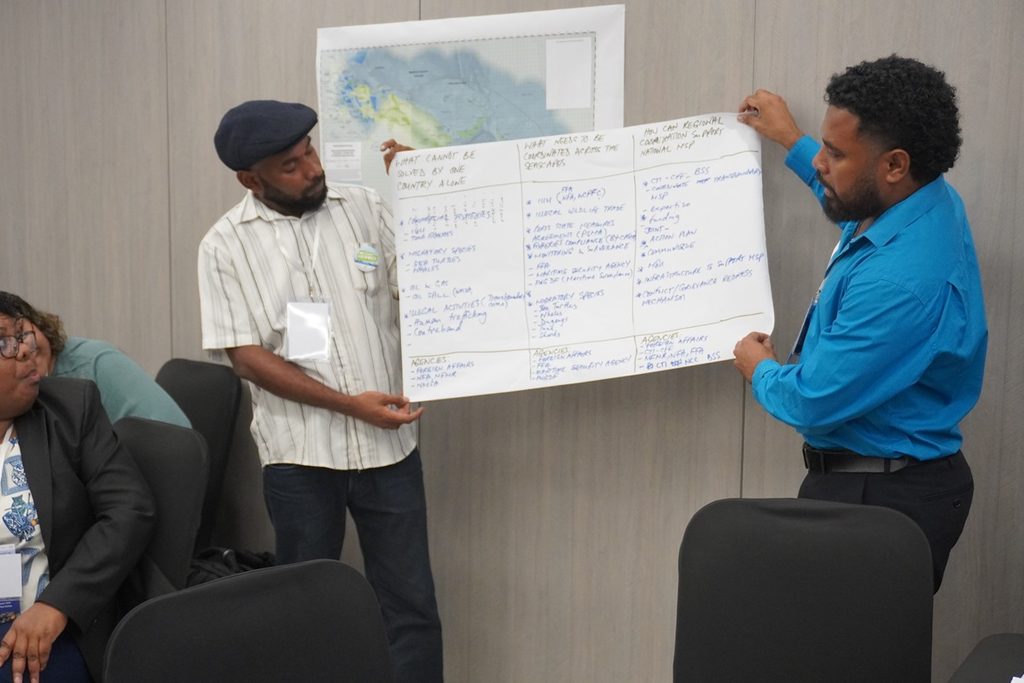
Discussions also highlighted the potential of the Melanesia Ocean Corridor of Reserves (MOCOR) to build momentum for large-scale ocean management across PNG, Solomon Islands and other Pacific partners. Participants further discussed the existing marine turtle management memorandum of understanding as a foundation for continued transboundary action.
For PNG, the immediate priority is to initiate its national MSP process, with the National Oceans Office identified as the lead institution. Proposed next steps include presenting the training outcomes and MSP framework to the Office and establishing a working group with clear terms of reference and a workplan.
Angela Kwapena of PNG’s National Fisheries Authority highlighted the value of MSP for fisheries and marine resources management. “MSP provides a structured way of understanding these different uses and finding ways for them to coexist sustainably,” she said. “From a fisheries management perspective, the training has helped me understand that we need to consider a broader marine ecosystem like spatial interactions and the activities taking place in the area, so the question of why is that important because this knowledge will help in making better-informed decision-making.”
The workshop concluded with a clear direction for advancing MSP across the Bismarck Solomon Seas. By strengthening national capacity and aligning management approaches in transboundary waters, Indonesia, PNG and Solomon Islands can help protect the seascape’s exceptional biodiversity while sustaining the communities and livelihoods that depend on a healthy ocean.
Photos: Nadia Qurotha/Coral Triangle Center