
CTC Leads Pilot of National Guideline for Provincial MPA Management in Indonesia

Efforts to strengthen the management of Regional Marine Conservation Areas (Kawasan Konservasi Daerah/KKD) in Indonesia are moving forward, following a pilot of a draft national guideline designed to help provincial governments better integrate marine conservation into regional development planning and budgeting.
Coral Triangle Center (CTC), in partnership with the Directorate General of Regional Development, Ministry of Home Affairs, and the Ministry of Marine Affairs and Fisheries, piloted the draft National Guideline for Strengthening Local Government Capacity in Regional Marine Conservation Area Governance from 9-12 September 2026.
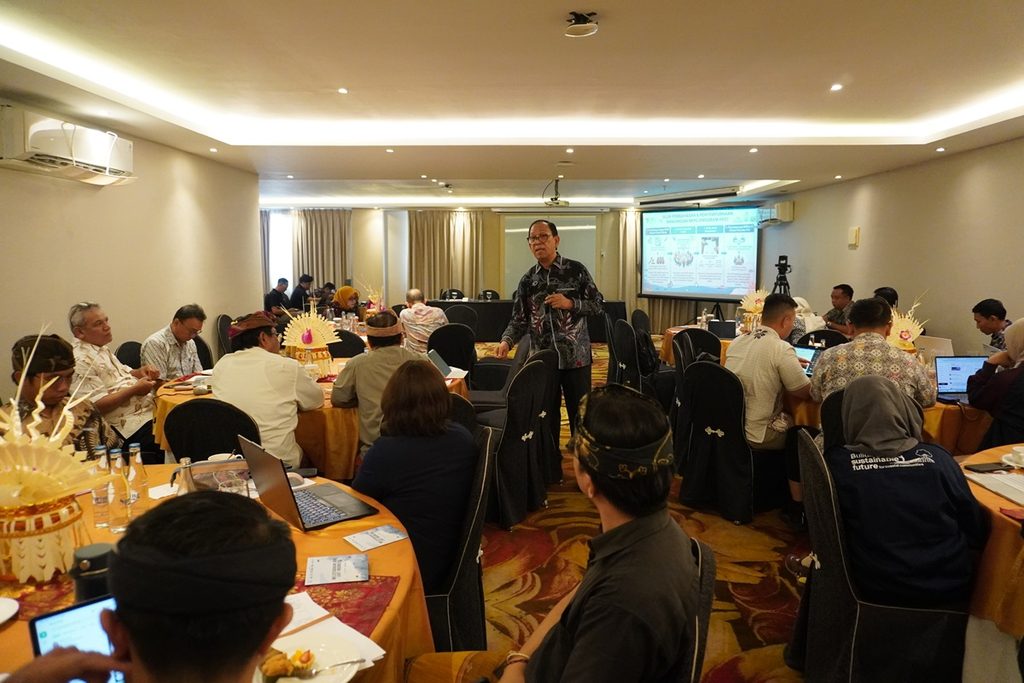
The four-day initiative brought together central and local government representatives, development partners, businesses, and communities to examine governance challenges and the realities of managing marine conservation at the local level.
The Ministry of Home Affairs expressed its commitment to supporting the development of a ministerial decree that would provide a regulatory basis for strengthening local government governance of marine conservation areas. The ministry’s Legal Bureau also expressed readiness to assist the legal drafting and harmonization process.

The discussions identified several challenges facing provincial governments, including limited human resources, institutional capacity, operational planning, infrastructure, and monitoring systems. Participants explored how conservation management could be better integrated into existing regional planning and budgeting processes.
Other areas of focus included strengthening the Unit Pelaksana Teknis Daerah (UPTD), a regional technical implementation unit, and exploring institutional and financial arrangements, such as BLUD mechanisms, where appropriate. Another priority was to identify funding opportunities beyond conventional government budgets while maintaining ecological sustainability.

The discussions further emphasized that conservation areas should be positioned as development assets rather than costs. These areas have the potential to support fisheries productivity, sustainable tourism, coastal protection, blue carbon, research and education, and local businesses. Recognizing these benefits within regional development planning could strengthen the case for sustained government investment in conservation management.
To connect these discussions with local realities, participants visited Nusa Penida on the second day, where they met a seaweed-farming community, local seaweed processors, a village head, and a local dive operator. Their conversations provided firsthand perspectives on how coastal and marine resources support local livelihoods and economy, and why effective conservation management matters to the communities that depend on them.
The visit also provided a practical context for exploring sustainable conservation financing. CTC shared findings from its previous willingness-to-pay study in Nusa Penida, which found that 85% of surveyed tourists were willing to contribute to conservation management, with a potential contribution of USD 4-5 per visitor per entry.

Input from the Government of Bali and other stakeholders, together with insights from the field visit, provided practical considerations for refining the draft guideline. These included staffing needs, management structures, financing options, and ways to incorporate marine conservation into regional plans and budgets. The experience also reinforced the need for a common national framework adaptable to diverse ecological, economic, social, and administrative conditions across provinces.
The pilot also helped clarify the complementary roles of the two ministries. The Ministry of Home Affairs supports the local governments in planning, budgeting, management arrangements, implementation, reporting, monitoring and evaluation. The Ministry of Marine Affairs and Fisheries maintains its technical responsibilities related to marine conservation.

The inputs gathered during piloting will inform further technical revisions and consultations with relevant units of the Ministry of Home Affairs. These steps will help ensure the guideline is comprehensive, practical, and responsive to the challenges faced by provincial governments. The process also strengthened the commitment of both ministries and provincial governments, including Bali and Maluku, to advance the guideline and its regulatory basis.
Writer: Asia Salsabilla, Bambang Wicaksono
Photos: Asia Salsabilla/CTC