
CTC at ICRS 2026: Sharing a Decade of Reef Conservation Lessons with the World
Coral reefs are at a turning point—and this July, Coral Triangle Center (CTC) joined the global scientific community in Auckland, New Zealand, to support share lessons from the frontlines and set the agenda for what comes next.
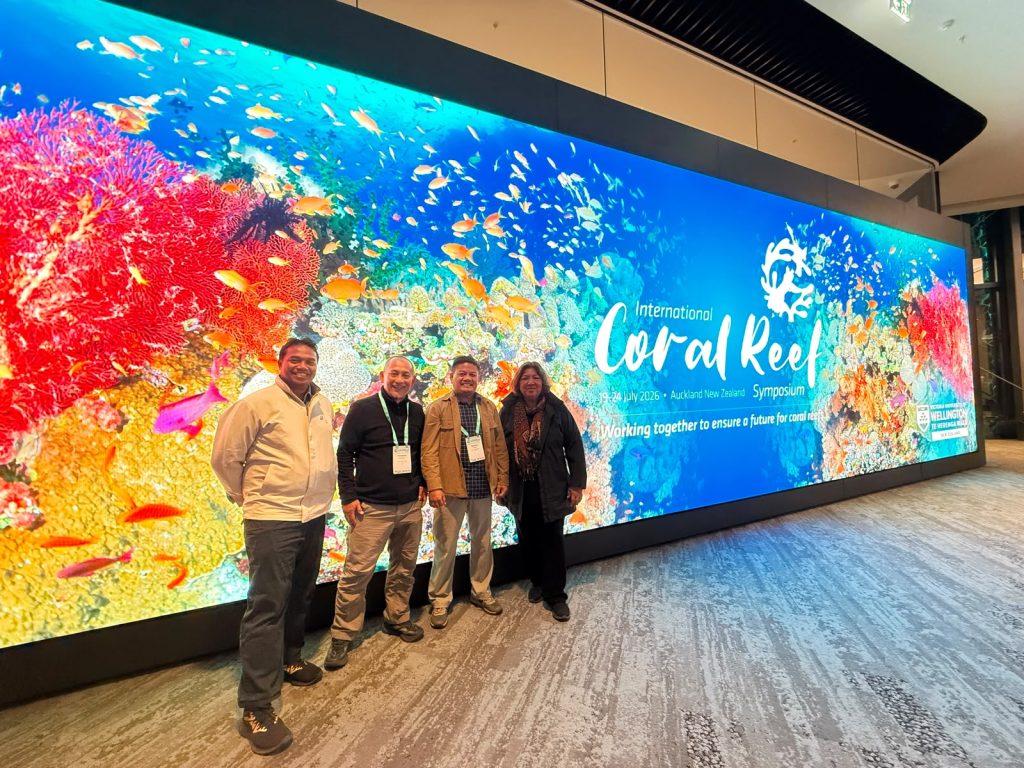
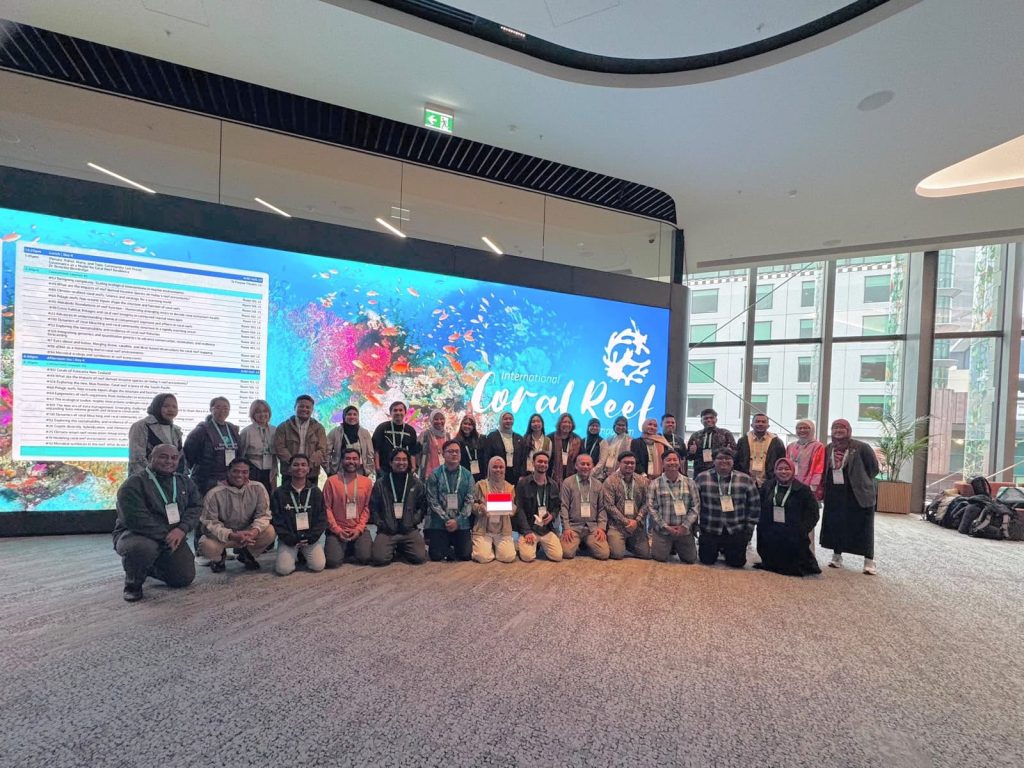
The 16th International Coral Reef Symposium (ICRS), held from July 19 to 24, 2026, is the biggest gathering in coral reef science, convening researchers and community practitioners from around the world once every four years. This year’s symposium drew more than 2,100 delegates from over 90 countries, taking stock of the fourth global bleaching event, showcasing the latest in reef restoration and technology, and local stewardship. CTC was part of a 65-person Indonesian delegation at the symposium and presented three areas of research and lessons learned spanning Indonesia and Timor-Leste.
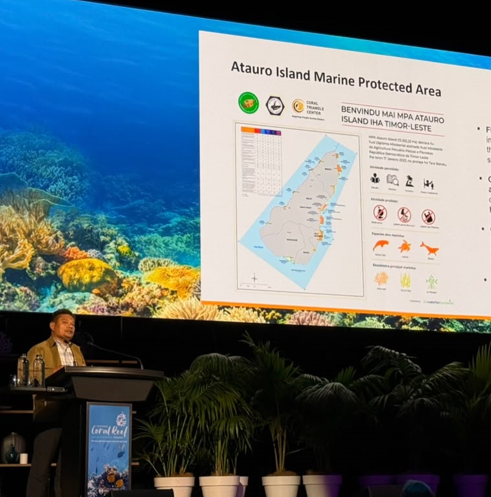
Atauro Island, Timor-Leste: A young MPA shows results
CTC’s Senior Marine Conservation Adviser Marthen Welly presented Reef Health Status in the First Timor-Leste Marine Protected Area (MPA), covering Atauro Island MPA—established by ministerial decree in 2023 and built around the traditional Tara Bandu marine tenure system. Comparing 2017 and 2025 data across 19 monitoring sites, average coral cover rose from 38.91% to 42.29%, with coral mortality staying low across the MPA. Reef fish showed even stronger gains: abundance jumped from 1,365 to 7,264 individuals per hectare, and biomass from 336 to 860 kg per hectare. The results suggest Atauro’s management model is working, though sites still showing some decline will need targeted follow-up.
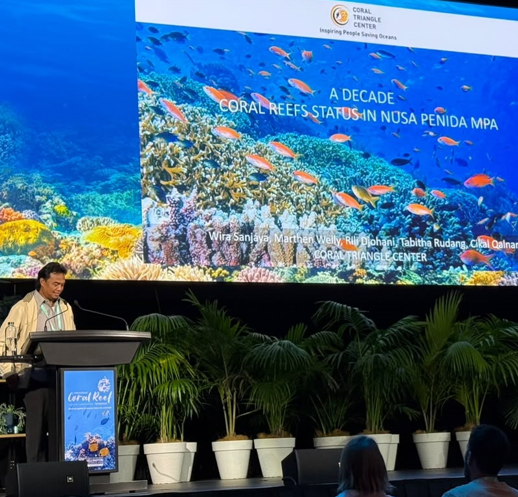
Nusa Penida, Bali: A decade of reef health monitoring data
CTC Bali Portfolio Manager Wira Sanjaya presented “A Decade Coral Reefs Status in Nusa Penida MPA”, a 12-year assessment (2013–2024) of live hard coral cover across 14 permanent monitoring stations. Average coral cover across the MPA was at 34.09%, a “medium” condition. Atuh Bay climbed steadily to 45.61%, helped by natural protection and low tourism pressure and Mangrove Point recorded the highest cover at 51.15%, boosted by nutrient-rich upwelling. His presentation identified 2019 and 2022 as turning points tied to flood and pandemic-related disturbances—evidence that sustained, long-term monitoring is essential for fine-tuning zoning and tourism management. These results demonstrate that Nusa Penida reefs remain dynamic but moderately resilient. He noted that continued long-term monitoring is critical to refine MPA zoning, manage visitor intensity, and strengthen climate-resilient reef management.
Banda Islands, Maluku: Stability through community-based conservation
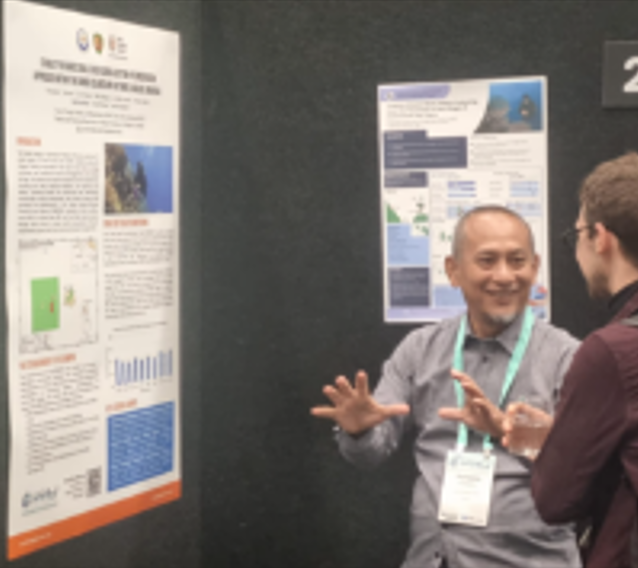
CTC Maluku Portfolio Manager Purwanto presented a poster on the Banda Islands Marine Protected Areas Network (BIMPAN), established in 2017. Tracking live hard coral cover at 21 sites from 2012 to 2025, he presented data that shows average coral cover essentially unchanged—54.1% in 2012 versus 54.7% in 2025—a notable result against a global backdrop of reef decline. The finding points to the effectiveness of BIMPAN’s bottom-up conservation model, while highlighting the need for continued investment in local capacity and enforcement as ocean warming and storm events intensify.
A shared commitment
CTC Executive Director Rili Djohani, who attended her first ICRS in Guam back in 1992, reflected on how far the field has come: the symposium now embraces long-term monitoring alongside community-centered conservation, traditional ecological knowledge, art, and education. She highlighted the strong showing from CTC’s field learning sites, and the many productive conversations with partners, donors, policymakers, and community groups throughout the week.
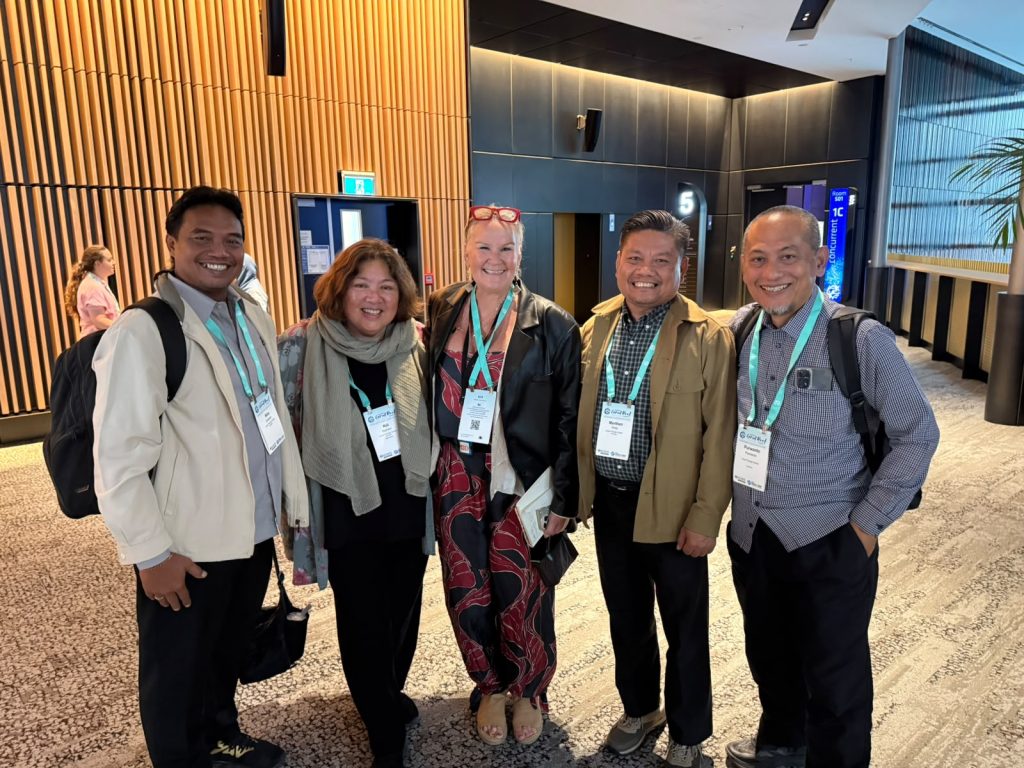
Together, these three studies—from Bali, Maluku, and Timor-Leste—reflect what makes CTC’s work distinctive: rigorous, long-term monitoring and solutions paired with community-rooted management. As reefs face an increasingly uncertain future, that combination of data and local stewardship is exactly what ICRS 2026 called for.
Photos: Rili Djohani/CTC and Wira Sanjaya/CTC