
Supporting Marine Protection Through Data, Capacity Building, and Collaboration in the Banda Islands
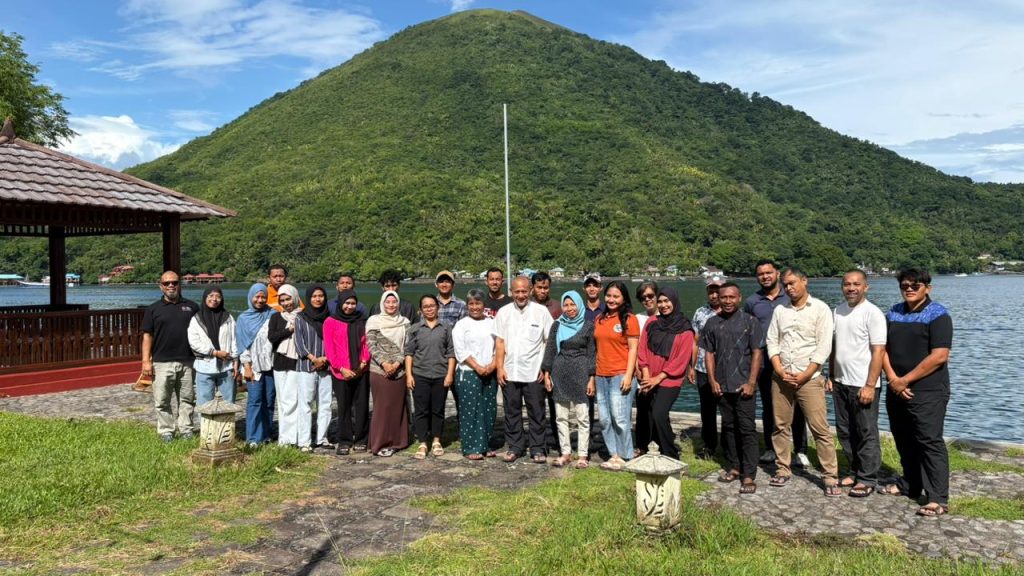
In February 2026, the Coral Triangle Center intensified its efforts to strengthen marine conservation in the Banda Sea through a series of integrated activities designed to reinforce data systems, institutional collaboration, and community capacity. At the center of these efforts was a workshop and training on socio economic survey methods held from 18 to 22 February 2026, forming part of a five-year Blue Action Fund project titled “Strengthening Marine Protected Areas and the Protection of Endangered Species in the Banda Sea, Indonesia”.
The project seeks to enhance the design and long-term sustainability of Marine Protected Areas and Locally Managed Marine Areas in the Banda Islands. Its approach combines capacity building for effective management, engagement of communities in the blue economy, and the establishment of sustainable conservation finance mechanisms. Beyond protecting coral reefs, the program aims to improve management performance, diversify local economic opportunities, and promote compliance with sustainable fishing regulations to safeguard Endangered, Threatened, and Protected species. The Banda Islands are expected to serve as a model for similar conservation initiatives across remote island ecosystems in Indonesia, contributing to healthier seas that support both people and nature.
The February activities were not limited to training alone. To ensure effective implementation and stakeholder support, CTC organized a sequence of coordinated engagements across the Banda Sea area. These included resource use monitoring in Banda Island and Ay Rhun Island MPAs, regular coordination meetings with community surveillance groups known as Pokmaswas, an annual evaluation meeting of the Forum of Marine and Fisheries Resource Surveillance in Banda, a meeting to develop and finalize socio-economic survey methods, the enumerator training, and the implementation of the socio-economic baseline survey in eight target villages.
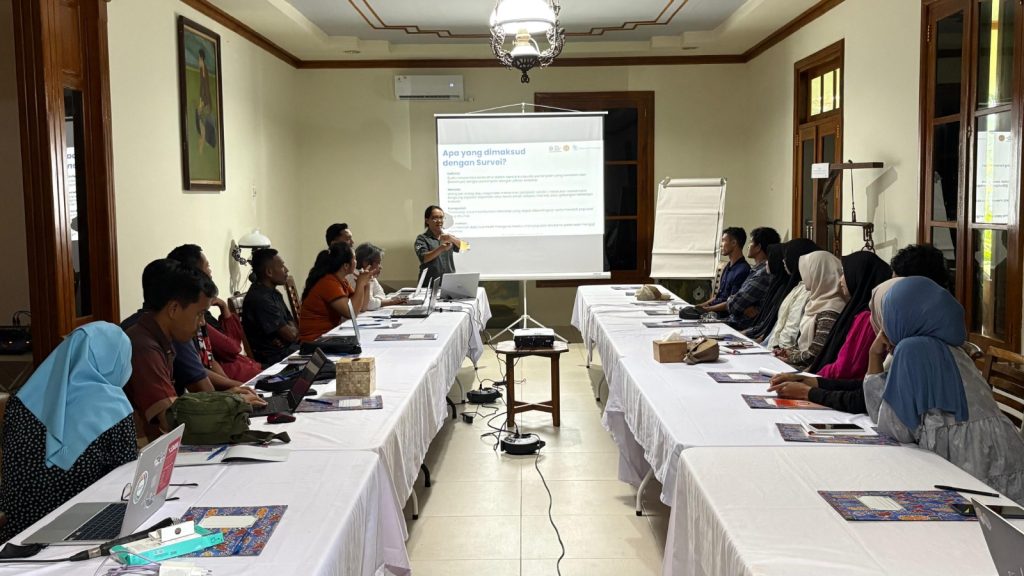
The socio-economic workshop and training represented a crucial step in this broader framework. Over five days, participants reviewed and refined survey instruments and monitoring protocols to ensure alignment with project indicators. The process focused on strengthening the technical foundation of data collection so that subsequent interventions are grounded in credible evidence.
The training was facilitated by Dr. Fitryanti Pakiding and her team from the University of Papua, who guided participants through survey methodology, sampling strategies, ethical considerations, and data quality assurance. Eighteen participants, including seven women, attended the training. They represented CTC Maluku staff, BKKPN Kupang TWP Laut Banda, the Marine and Fisheries Branch Office Cluster VI Banda, alumni of Banda Neira University, and members of the local community.
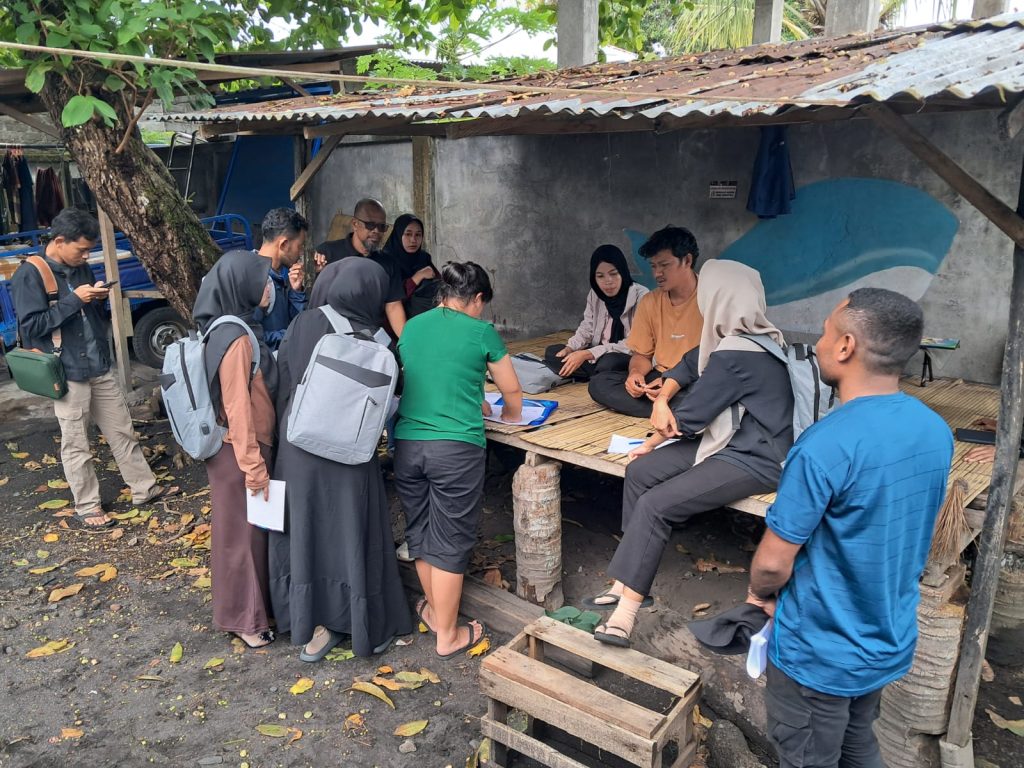
Participants were introduced to digital data collection using the Kobo Collect application and engaged in practical simulations before conducting a field practice session. This hands-on approach was designed to strengthen the capacity of CTC staff, partners, and local enumerators to independently implement high quality surveys in their own communities.
Following the training, the Baseline Socio Economic Survey was carried out from 23 February to 8 March 2026 across eight villages: Ay, Rhun, Tanah Rata, Rajawali, Selamon, Lonthoir, Hatta, and Kampung Baru. A total of 344 respondents were selected through random sampling to ensure representative and reliable results. In addition, in-depth interviews with key informants in each target village were also carried out, focusing on ensuring that the perspectives of women, youth, and vulnerable households are reflected in the data. The Survey also explored blue economy dimensions related to micro, small, and medium enterprises (MSMEs) that support blue jobs development.
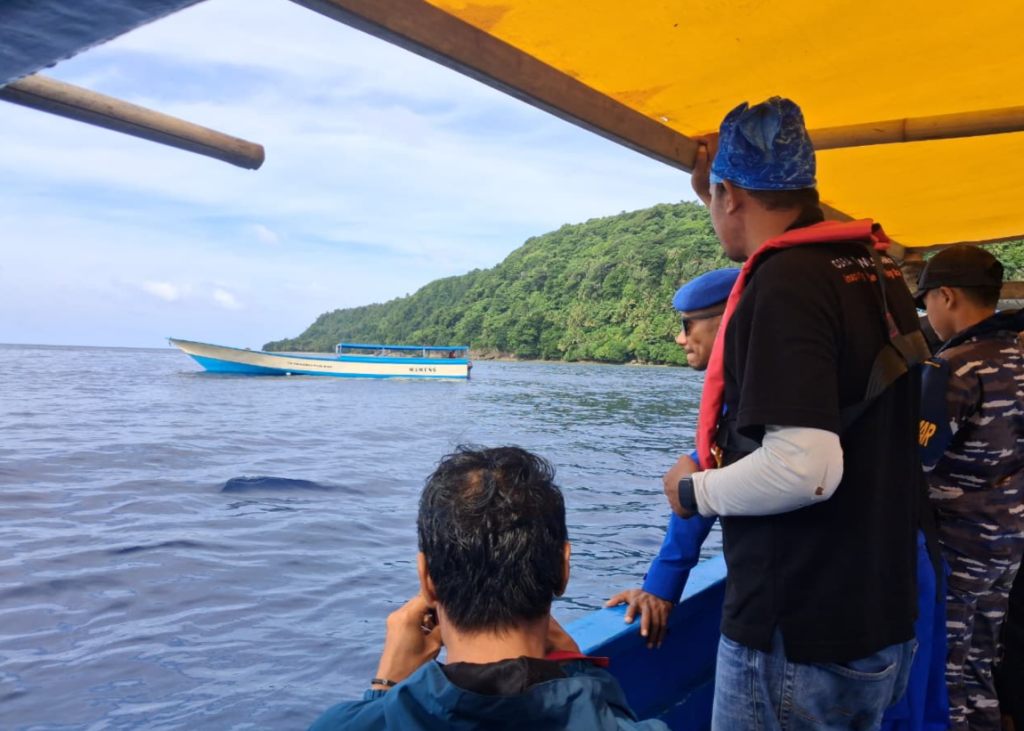
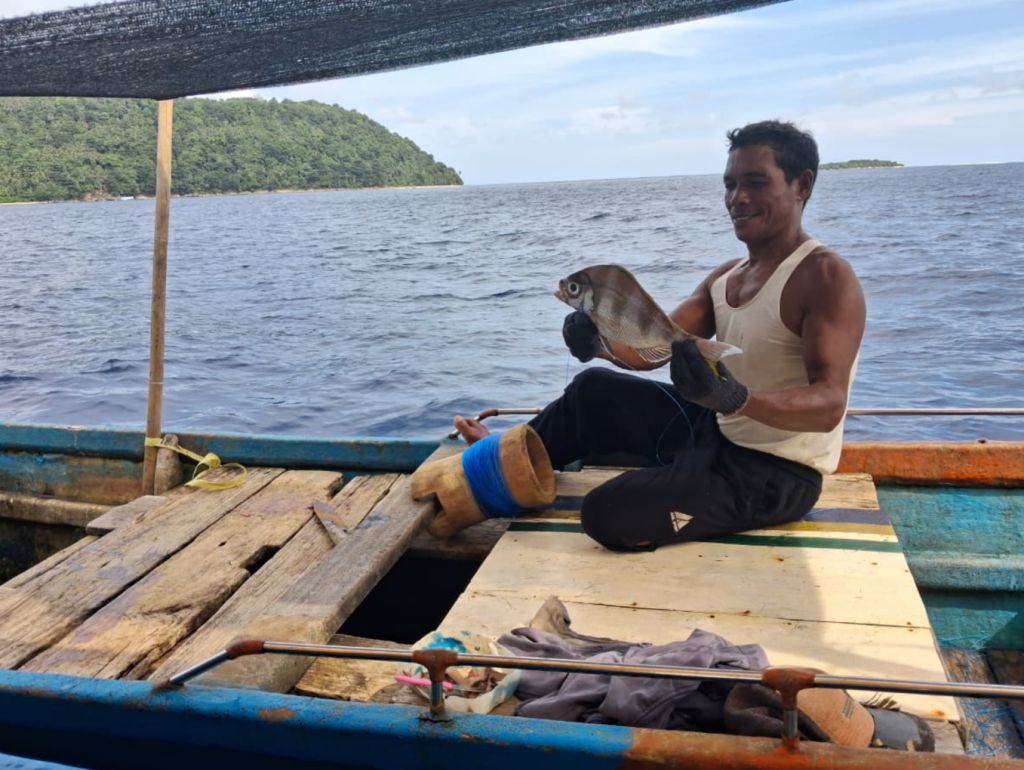
Parallel to the survey work, resource use monitoring activities were conducted to identify and document patterns of marine resource utilization in Banda and Ay Rhun MPAs. Data collection focused on capturing trends and characteristics of fisheries, including demersal, pelagic, and deep sea snapper and grouper fisheries. These activities aim to provide a structured snapshot of fishery dynamics as an initial step toward more systematic fisheries data collection.
Coordination meetings with Pokmaswas groups and the Marine and Fisheries Resource Surveillance Forum were also convened to consolidate participatory surveillance efforts and strengthen collaborative monitoring systems across Banda Sea and Ay Rhun MPAs. By reinforcing communication between local surveillance groups, government agencies, and conservation partners, the program seeks to enhance compliance and improve the quality of participatory oversight.
Collectively, these activities are designed to produce concrete outputs. Resource use monitoring will generate datasets and analyses that enable communities and policymakers to make informed decisions on sustainable resource management. Strengthened coordination with Pokmaswas is expected to improve the effectiveness of community-based surveillance, while the annual surveillance forum reinforces inter-agency collaboration. Meanwhile, the socio-economic survey provides reliable and comprehensive baseline data to support planning, monitoring, and adaptive management of conservation interventions.
By investing simultaneously in data systems, local capacity, and institutional collaboration, CTC is reinforcing the operational foundations of marine protected area management in the Banda Islands. The February 2026 activities mark a coordinated step toward ensuring that conservation in the Banda Sea is informed by evidence, supported by institutions, and sustained by the communities who depend on its resources.
Writers: Asia Salsabilla, Kasman, Shendy S. Raiman.
Photos: Shendy S. Raiman/CTC